
Many coaches rely on generic templates that fail to address the unique needs of busy professionals, entrepreneurs, and individuals seeking real accountability. Custom coaching plans bridge this gap by tailoring strategies to each client's goals, challenges, and lifestyle. This guide walks you through an 8-step process to design personalized coaching plans that boost adherence and drive measurable results. You'll learn how to assess client readiness, blend proven frameworks with accountability tools, and iterate plans based on real-time feedback for sustained success.
Table of Contents
- What You Need: Prerequisites And Planning Materials
- Step-By-Step: How To Design And Customize Coaching Plans
- Troubleshooting And Expert Tips For Better Coaching Plan Outcomes
- Measuring Success: Evaluating And Iterating Your Coaching Plans
- Discover AI-Enhanced Accountability For Coaching Success
- Frequently Asked Questions
Key takeaways
| Point | Details |
|---|---|
| Custom plans improve outcomes | Tailored coaching plans increase client goal attainment and long-term adherence compared to generic templates. |
| Follow an 8-step process | A structured approach ensures thorough needs assessment, goal setting, strategy development, and continuous iteration. |
| Blend frameworks with tools | Combining GROW or CLEAR models with accountability trackers drives stronger client engagement and progress. |
| Build in flexibility | Plans designed for 80% adherence and adaptability lead to better long-term success than rigid structures. |
What you need: prerequisites and planning materials
Before creating a custom coaching plan, gather comprehensive client background through structured interviews and surveys. Ask about current challenges, past goal attempts, motivation levels, and daily routines. Understanding your client's reality helps you design strategies that fit their life, not an idealized version of it. Core steps to create custom coaching plans include assessing client needs and clarifying SMART goals collaboratively.
Define SMART goals with your client: Specific, Measurable, Achievable, Relevant, and Time-bound. A vague goal like "get healthier" becomes "lose 15 pounds in 12 weeks by exercising 4 times weekly and tracking meals daily." This precision enables clear accountability and progress tracking. SMART goals form the foundation of every effective custom plan.
Prepare coaching frameworks to structure your sessions. GROW (Goal, Reality, Options, Will) and CLEAR (Contracting, Listening, Exploring, Action, Review) provide proven session flows that keep conversations focused on progress and next steps. Choose frameworks that match your coaching style and client preferences. You can adapt these models as you learn what resonates with each individual.
Gather essential tools before your first planning session:
- Client intake questionnaires covering goals, obstacles, and preferences
- Session templates for consistent structure and note-taking
- Accountability trackers for daily habits and weekly milestones
- Progress visualization tools like charts or dashboards
- Communication platforms for check-ins between sessions
Pro Tip: Create a planning toolkit with customizable templates for different client types. Business executives need different accountability structures than fitness clients, so design modular components you can mix and match. This saves time while maintaining personalization.

Consider how personalized coaching support enhances client engagement compared to one-size-fits-all approaches. Modern AI accountability tools can supplement human coaching by providing daily check-ins and progress reminders, freeing you to focus on strategic guidance during sessions.
Step-by-step: how to design and customize coaching plans
An effective custom coaching plan uses an 8-step process covering needs assessment, goal setting, strategy development, and iteration. Follow this sequence to build plans that drive real results.
-
Assess client needs thoroughly. Conduct a 60-90 minute intake interview exploring goals, obstacles, past attempts, and motivation sources. Use surveys to capture quantitative data on priorities and readiness. Document everything to identify patterns and opportunities.
-
Clarify SMART goals collaboratively. Work with clients to transform vague aspirations into concrete targets. Break large goals into quarterly milestones and monthly checkpoints. Ensure each goal includes measurable criteria so progress is objective, not subjective.
-
Design session structure. Establish session length (typically 45-90 minutes), frequency (weekly or biweekly), and agenda format. Include time for progress review, obstacle discussion, strategy refinement, and action planning. Consistency builds momentum and accountability.
-
Develop tailored strategies. Create action plans that fit your client's schedule, resources, and preferences. A busy parent needs different strategies than a single professional. Match interventions to context: morning routines for early risers, evening reflection for night owls.
-
Set responsibilities and accountability measures. Define what the client commits to between sessions and how you'll track it. Assign specific actions with deadlines. Clarify your role: Will you send reminders? Review daily logs? Schedule mid-week check-ins?
-
Create detailed action plans. Break strategies into weekly tasks with clear deadlines and success criteria. For example, "Complete 3 strength workouts by Friday, logging exercises and weights in tracker" beats "work out more." Specificity drives follow-through.
-
Define milestones and measurement criteria. Establish checkpoints at 2 weeks, 1 month, 3 months, and 6 months. Specify what success looks like at each stage. Include both outcome metrics (pounds lost, revenue gained) and process metrics (workouts completed, calls made).
-
Iterate plans weekly based on feedback. Review what worked and what didn't after each session. Adjust strategies, timelines, or accountability methods as needed. Blending GROW and accountability tools improves client engagement and goal success when you stay responsive to real-world results.
Pro Tip: Document your iteration decisions in a shared plan document. When clients see how you adapt to their feedback, they feel heard and stay committed. Transparency builds trust and reinforces the collaborative nature of custom coaching.
Explore how AI voice coaching benefits can complement your human sessions by providing daily accountability touchpoints. Hybrid coaching approaches that combine human strategy with AI execution often outperform purely human or purely automated models.
Troubleshooting and expert tips for better coaching plan outcomes
Client drop-off typically happens when plans feel too rigid or disconnected from daily reality. If a client misses two consecutive check-ins, schedule a reset conversation. Ask what's blocking progress and whether the plan needs adjustment. Sometimes life circumstances change, requiring a complete strategy overhaul rather than minor tweaks.
Flexible, template-based coaching plans with 80% adherence outperform rigid plans in long-term success. Design plans expecting occasional setbacks. Build forgiveness into your accountability model: if a client completes 4 of 5 weekly workouts, celebrate the 80% win rather than fixating on the miss. This positive reinforcement sustains motivation better than perfectionism.
Anticipate disruptions from day one. Ask clients about upcoming travel, busy seasons at work, or family obligations. Build lighter weeks into the plan during predictable high-stress periods. This proactive flexibility prevents the all-or-nothing thinking that derails many coaching relationships.
Common implementation challenges coaches face:
- Clients set unrealistic timelines and get discouraged by slow progress
- Generic accountability methods don't match client communication preferences
- Plans ignore emotional complexity and focus only on tactical execution
- Coaches over-structure sessions, leaving no room for emergent issues
- Measurement systems are too complicated, creating tracking fatigue
Human coaching nuance is essential for navigating emotional and situational edge cases from day one. When a client faces unexpected grief, job loss, or health issues, templates fall short. Your judgment determines whether to pause goals, adjust timelines, or shift focus entirely. This adaptability is what clients pay for.
Pro Tip: Create a "plan B" for each major goal at the outset. If your client aims to run a marathon but gets injured, what's the backup fitness goal? Having alternatives ready prevents momentum loss when obstacles arise. Clients appreciate this foresight and feel more secure committing to ambitious targets.
Leverage data-driven accountability to identify patterns your clients might miss. Weekly tracking reveals whether someone consistently struggles on Mondays or excels on Fridays, informing strategy adjustments. AI for accountability can automate this pattern recognition, surfacing insights you can discuss in sessions.
Measuring success: evaluating and iterating your coaching plans
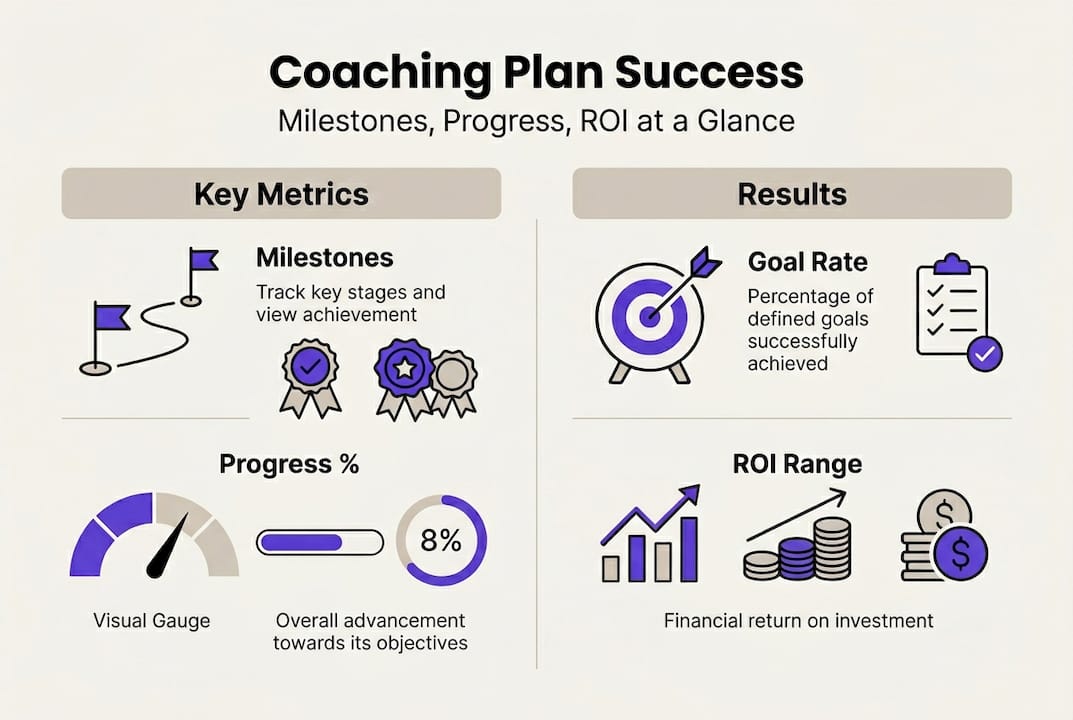
Establish clear milestones linked directly to client goals. If the goal is launching a business, milestones might include "complete business plan by week 4," "secure first client by week 8," and "reach $5,000 monthly revenue by week 16." Each milestone needs measurable criteria so progress is objective.
Assign responsibility for each milestone to either client or coach. Clients own action execution while coaches own guidance, accountability, and resource provision. Clarify these roles upfront to prevent confusion. When both parties know their commitments, follow-through improves dramatically.
75% of coaching clients achieve 80% of their goals within six months, with median ROI of 5-7x investment. Track your own success rates to identify what works. If clients consistently struggle with certain goal types or strategies, adjust your approach. Your coaching practice should evolve based on cumulative client data.
Use tracking tools that match client preferences. Some love detailed spreadsheets while others prefer simple yes/no daily check-ins via text. The best tracking system is the one your client actually uses. Start simple and add complexity only if clients request it.
Iterate plan components based on client feedback and outcomes:
- Review progress data weekly to spot trends and obstacles
- Ask clients what's working and what feels forced or unrealistic
- Adjust accountability frequency if clients need more or less contact
- Modify strategies when results plateau or client circumstances change
- Celebrate wins immediately to reinforce positive behaviors
Internal coaches often outperform external ones due to stronger accountability relationships. Build relationship depth by remembering details, acknowledging effort, and showing genuine investment in client success. These human elements make your coaching irreplaceable despite technological advances.
Create a measurement dashboard showing goal progress, milestone completion rates, and adherence percentages. Share this with clients monthly so they see their trajectory. Visual progress motivates continued effort and helps clients appreciate how far they've come, not just how far they have left to go.
Pro Tip: Schedule formal plan reviews every 4-6 weeks separate from regular coaching sessions. Use this time to zoom out, assess overall strategy effectiveness, and make structural changes. This prevents incremental drift and ensures your plan stays aligned with evolving client priorities.
Explore how AI coaching productivity tools can automate routine tracking and reporting, giving you more time for high-value strategic conversations. Technology should enhance your coaching, not replace the human judgment that makes custom plans effective.
Discover AI-enhanced accountability for coaching success
Custom coaching plans require consistent accountability to drive results, but daily check-ins demand significant time investment. Coach Call AI adds AI-powered accountability to your existing coaching framework through automated phone and WhatsApp calls. Your clients receive personalized check-ins, motivational messages, and progress tracking between your sessions, maintaining momentum without increasing your workload.
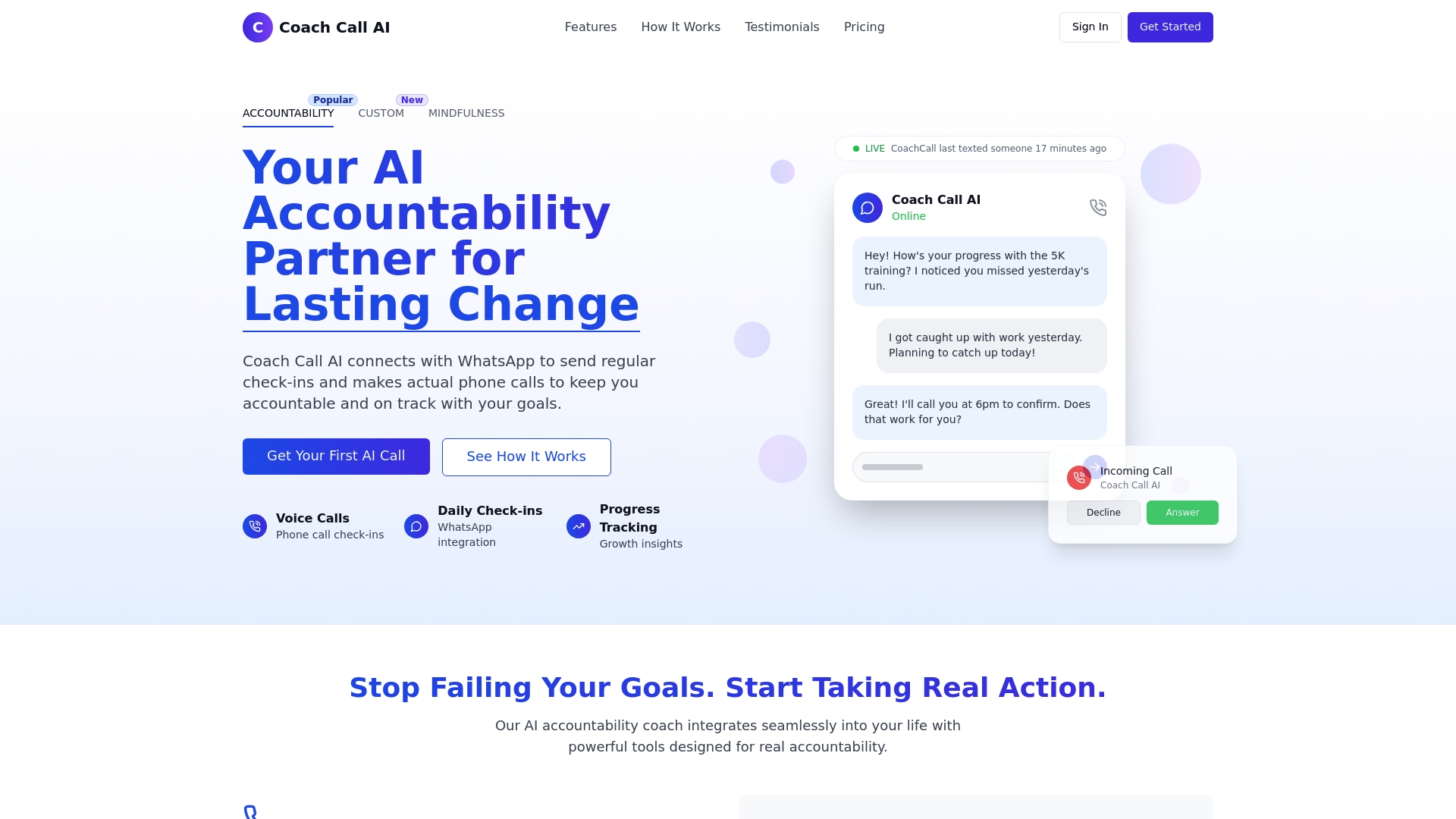
The platform integrates seamlessly with your coaching approach, handling routine accountability while you focus on strategic guidance and complex problem-solving. Clients appreciate the daily support, and you gain detailed progress data to inform session discussions. Coach Call AI accountability partner technology lets you scale your practice without sacrificing the personalization that makes custom coaching effective.
Frequently asked questions
How do I assess a client's readiness for a custom coaching plan?
Use structured intake interviews asking about past goal attempts, current motivation sources, and obstacle awareness. Assess whether clients take ownership of outcomes or blame external factors. Gauge commitment level by asking what they're willing to sacrifice or change to achieve their goals. Clients who articulate specific reasons for wanting change and acknowledge their role in past setbacks show higher readiness for custom coaching.
What coaching frameworks best support accountability in custom plans?
GROW, CLEAR, OSKAR, and FUEL are proven effective frameworks for structured coaching focusing on accountability. GROW works well for goal-oriented clients who need clear action planning. CLEAR suits clients requiring deeper exploration before committing to strategies. These frameworks guide session flow and ensure structured goal review and planning. Coaches can blend frameworks with custom tools for best results, adapting the model to client learning styles and preferences.
How often should coaching plans be reviewed and adjusted?
Weekly iteration based on client feedback and progress ensures plans stay relevant and motivating. Review action plan effectiveness after each session, making small adjustments to tactics and timelines. Conduct comprehensive plan reviews every 4-6 weeks to assess overall strategy and make structural changes. Consistent tuning improves adherence and success by keeping plans aligned with evolving client needs and circumstances.
What's the ideal session frequency for custom coaching plans?
Most clients benefit from weekly sessions during the first month to build momentum and establish habits. After initial progress, biweekly sessions often suffice for maintaining accountability while giving clients space to execute independently. Match frequency to client needs: those facing complex challenges or building new businesses may need weekly support longer, while clients working on established habits can succeed with monthly strategic check-ins supplemented by automated accountability tools.
How do I handle clients who consistently miss milestones?
Schedule a reset conversation to explore underlying obstacles without judgment. Often missed milestones signal unrealistic timelines, hidden fears, or life circumstances that weren't factored into the original plan. Adjust goals to match current capacity rather than pushing harder on the same strategy. Sometimes clients need to build foundational habits before tackling ambitious targets. Reframe setbacks as data points informing better strategy rather than failures requiring more willpower.