
Staying accountable to fitness goals, productivity targets, and mental wellness routines is tough when life gets busy. AI-driven personal development techniques now offer real-time coaching, adaptive scheduling, and motivational support tailored to your lifestyle. This guide explains how to choose and apply AI tools that fit your needs, helping you achieve over 25% improvement in goal completion while protecting your privacy.
Table of Contents
- How To Choose The Right AI-Driven Personal Development Technique
- AI Techniques For Accountability In Fitness And Productivity
- Mental Well-Being And Stress Management With AI
- Benefits Of AI-Driven Accountability Partners
- Comparison: Top AI Personal Development Tools
- Privacy And Data Considerations In AI Personal Development
- AI Integration With Wearables And Feedback
- Summary And Situational Recommendations
- Discover Coach Call AI For Personalized Accountability
- FAQ
Key takeaways
| Point | Details |
|---|---|
| Selection criteria | Evaluate AI tools based on customization, integration with daily apps, privacy protections, and proven accountability impact. |
| AI accountability benefits | AI coaching platforms increase goal achievement rates by over 25% through consistent check-ins and adaptive support. |
| Gamification and scheduling | AI habit trackers using gamification boost engagement by 30%, while adaptive scheduling can enhance productivity by 20%. |
| Privacy essentials | Leading platforms implement end-to-end encryption and data anonymization to safeguard personal information during coaching. |
| Integration advantages | AI tools combining voice calls and messaging deliver the highest user engagement and sustained adherence to personal development plans. |
How to choose the right AI-driven personal development technique
Selecting the best AI tool for accountability starts with understanding what matters most for your lifestyle and goals. Not all platforms offer the same depth of customization or privacy protections. Focus on five core criteria to make an informed decision.
First, prioritize customization and adaptability. Your AI coach should adjust recommendations based on your progress, preferences, and real-time feedback. Adaptive learning and personalized content can double skill acquisition speed, giving you a clear edge in achieving fitness or productivity milestones. Second, confirm the tool integrates seamlessly with platforms you already use daily, like WhatsApp or calendar apps. Integration reduces friction and keeps you engaged without adding new apps to juggle.
Third, verify privacy and data security features. Look for platforms offering end-to-end encryption and transparent data handling policies. Fourth, check whether the tool has measurable impact on accountability. Read user testimonials and case studies showing improved adherence rates or goal completion percentages. Finally, assess usability and accessibility. Busy professionals need intuitive interfaces and mobile-first designs that work on the go.
Pro Tip: Before committing, test free trials or demos to confirm the AI coach's communication style matches your preferences and that the platform feels effortless to use daily.
- Customization ensures the AI adapts to your unique needs and changing goals.
- Integration with familiar apps like WhatsApp or Slack boosts daily engagement.
- Privacy features like encryption protect sensitive health and productivity data.
- Proven impact metrics validate the tool's effectiveness in improving accountability.
- Usability and mobile access support busy, on-the-go lifestyles without added complexity.
Explore AI accountability partner features to see how these criteria apply in practice. For deeper background, review this AI personal development overview to understand the broader landscape.
AI techniques for accountability in fitness and productivity
AI transforms how you stick to fitness routines and manage productivity tasks through three proven techniques. Each leverages real-time data and behavioral science to keep you on track.
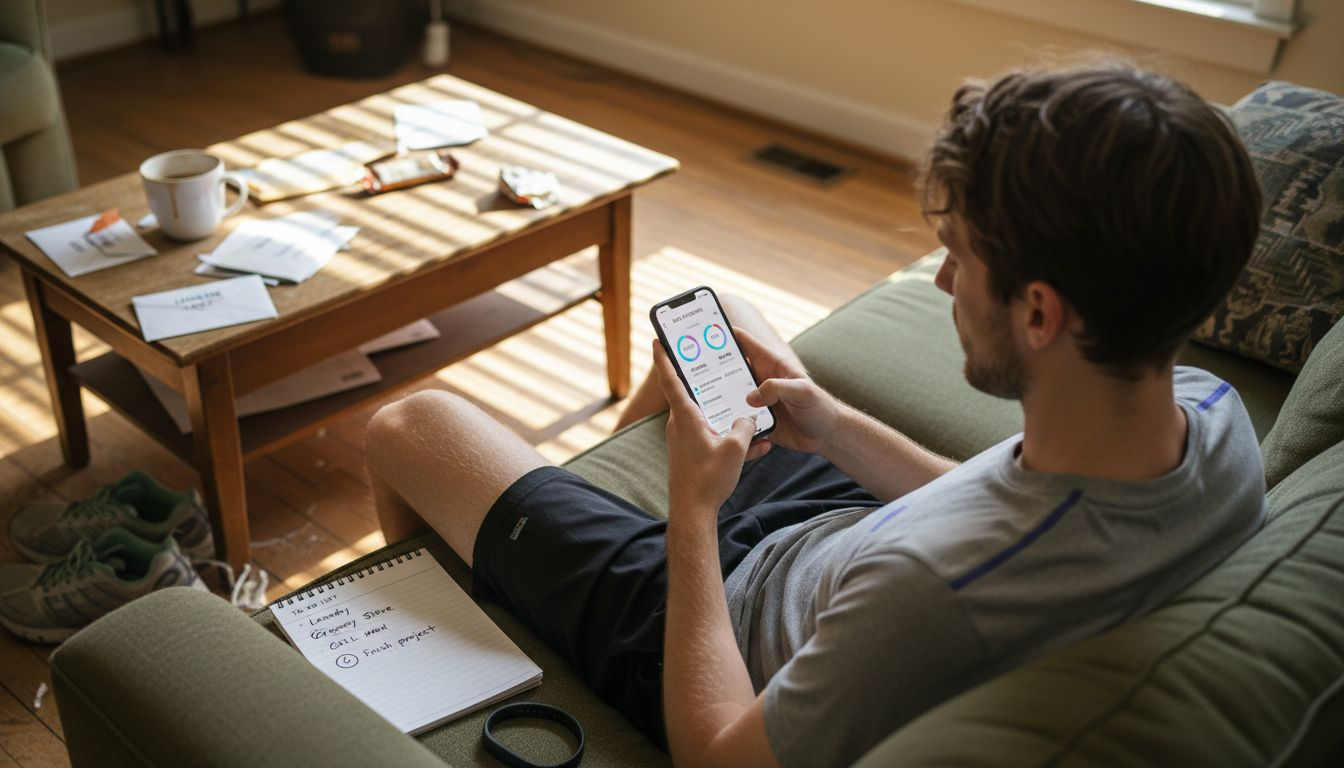
Gamified habit trackers turn daily routines into engaging challenges with points, streaks, and visual progress bars. Gamification and progress visualization increase habit adherence by approximately 30%, making workouts and task completion feel rewarding rather than tedious. Real-time task prioritization uses AI to analyze your schedule, energy levels, and deadlines, then suggests the most impactful tasks to tackle next. AI-driven productivity tools boost workplace productivity by up to 20% by eliminating decision fatigue and optimizing your workflow.
Scheduled AI check-ins deliver the biggest accountability boost for fitness. Scheduled digital check-ins increase fitness routine adherence by 40% by providing timely reminders, celebrating milestones, and adjusting plans based on your feedback. These check-ins mimic a human coach's motivational support but are available 24/7.
How to apply AI for tracking and motivation:
- Set specific, measurable goals in the AI platform (e.g., workout three times per week, complete five priority tasks daily).
- Enable automated reminders and voice call check-ins at times that suit your schedule.
- Review progress dashboards weekly to identify patterns and adjust your plans.
- Use gamified rewards to celebrate small wins and maintain momentum.
- Allow the AI to adapt your routines based on data like missed sessions or energy dips.
40% higher fitness adherence: Users supported by AI tools with scheduled check-ins and motivational messaging report significantly better consistency in maintaining workout routines.
- Gamified trackers make daily habits more engaging and visually rewarding.
- Real-time prioritization reduces overwhelm and focuses effort on high-impact tasks.
- Scheduled AI calls provide consistent motivation and accountability without relying on another person.
For platforms combining these techniques, check out fitness accountability AI tools. Learn more about gamified habit tracking benefits and the AI productivity tools impact in research studies.
Mental well-being and stress management with AI
AI supports mental wellness by recognizing mood changes and delivering personalized interventions when you need them most. Unlike static meditation apps, emotional AI detects subtle shifts in your language or voice tone during check-ins, then tailors mindfulness prompts or breathing exercises to your current state. AI-powered mental health support reduces reported stress by up to 25% by providing timely, relevant guidance that feels genuinely responsive.
Many platforms integrate cognitive behavioral therapy (CBT) techniques into their AI coaching. This approach helps you identify negative thought patterns, reframe anxious thinking, and build healthier mental habits over time. Regular AI-driven check-ins encourage ongoing practice rather than sporadic app usage, embedding stress management into your daily routine.
AI mental health tools excel at early intervention. If you report feeling overwhelmed or anxious during a check-in, the system can immediately suggest a short mindfulness exercise or schedule a longer session later that day. This real-time adaptability makes AI coaching especially valuable for busy individuals who struggle to prioritize mental wellness until stress peaks.
Pro Tip: Pair AI mental wellness tools with periodic human therapy sessions for a blended approach that combines AI's 24/7 availability with the depth of human expertise.
- Emotional AI detects mood fluctuations through language analysis and adjusts support accordingly.
- CBT integration helps build long-term mental resilience and healthier thought patterns.
- Real-time interventions prevent stress from escalating by offering immediate coping strategies.
- Regular check-ins normalize mental wellness practices and reduce stigma around seeking support.
Explore emotion regulation and support techniques for practical strategies. Review AI mental well-being benefits to understand the research backing these tools.
Benefits of AI-driven accountability partners
AI accountability partners replicate the motivational power of human coaching through natural language conversations and scheduled voice interactions. Natural language processing and scheduled calls increase goal achievement rates by over 25% by providing consistent, judgment-free support that adapts to your progress. Unlike human partners who may cancel or lose motivation, AI coaches are always available and never skip a check-in.
The consistency advantage is especially powerful for fitness goals. AI tools with scheduled check-ins boost fitness adherence by 40%, turning sporadic workouts into reliable routines. AI partners also track micro-progress that humans might overlook, celebrating small wins like completing a tough week or improving workout duration by just five minutes. This granular recognition keeps motivation high even when major milestones feel distant.
AI accountability partners dynamically adjust to your evolving needs. If you consistently miss morning workouts, the system might suggest evening sessions instead. If productivity dips on Fridays, it can reschedule demanding tasks earlier in the week. This responsiveness mimics a thoughtful human coach but operates at a scale and speed no person could match.
"AI coaching provides the reliability of a structured program with the flexibility of a personal trainer who knows your schedule, preferences, and setbacks intimately."
- AI partners deliver consistent check-ins without the risk of human unreliability or scheduling conflicts.
- Natural language AI creates conversational, judgment-free interactions that feel supportive rather than robotic.
- Real-time progress tracking and adaptive plans keep you aligned with your goals as circumstances change.
- 24/7 availability means support is always accessible, even during late-night motivation dips or early-morning doubts.
Discover AI coaching accountability features that combine voice calls and messaging for comprehensive support. Learn more about AI accountability coaching research and outcomes.
Comparison: top AI personal development tools
Choosing the right platform becomes easier when you compare features, engagement methods, and privacy protections side by side. Voice calls combined with messaging provide the highest user engagement among AI personal development tools, making platforms that offer both channels especially effective.
| Platform | Key Features | Best For | Privacy |
|---|---|---|---|
| Coach Call AI | WhatsApp voice calls, messaging, customizable schedules, progress tracking | Fitness-focused users needing consistent reminders and motivational calls | End-to-end encryption, user-controlled data sharing |
| Habitica | Gamified habit tracking, community challenges, avatar progression | Users motivated by gamification and social accountability | Standard encryption, community features may share some progress data |
| Todoist | AI task prioritization, adaptive scheduling, project management | Professionals seeking enhanced productivity and dynamic to-do lists | Encrypted data storage, privacy settings for task visibility |
| Woebot | Emotional AI, CBT techniques, conversational mental health support | Individuals focusing on stress management and mental well-being | End-to-end encryption, anonymous usage options |
Leading platforms implement encryption and data anonymization to protect sensitive personal information shared during coaching sessions. Verify these protections before committing to any tool, especially if you plan to discuss health data or personal challenges.
Pro Tip: If you have multiple goals (fitness, productivity, mental wellness), start with one platform that excels in your primary area rather than juggling several apps at once.
- Coach Call AI integrates voice and messaging for high engagement and personalized coaching.
- Habitica leverages gamification and community for users who thrive on social motivation.
- Todoist optimizes task management with AI-driven prioritization for busy professionals.
- Woebot specializes in mental health with emotional recognition and therapeutic techniques.
- Privacy features like encryption are non-negotiable for protecting personal development data.
Explore the Coach Call AI platform to see how voice call integration works in practice. Review this AI platform engagement study and AI privacy and security features for detailed comparisons.
Privacy and data considerations in AI personal development
Protecting your personal information is critical when sharing health data, productivity patterns, and mental wellness details with AI platforms. Leading AI tools use encryption and data anonymization to safeguard communications and minimize identification risks. End-to-end encryption ensures that only you and the AI system can read your messages and call transcripts, preventing third-party access even if data is intercepted.
Data anonymization separates personally identifiable details from the behavioral data AI uses to improve recommendations. This means the platform can refine its algorithms without storing your name, contact information, or other identifying details alongside your fitness or productivity metrics. Transparency in AI decision-making builds trust. Choose platforms that explain how they analyze your data and allow you to review or delete your information at any time.
You must actively manage privacy settings and data sharing preferences. Many platforms default to broader data collection to enhance AI performance, so review settings during onboarding. Disable optional data sharing if you prefer stricter privacy, even if it slightly reduces personalization accuracy.
- End-to-end encryption protects all communications between you and the AI coach from unauthorized access.
- Data anonymization separates your identity from behavioral insights used for AI training and improvements.
- Transparency features let you understand and control how the platform uses your personal information.
- Regular privacy audits and clear data retention policies demonstrate a platform's commitment to user security.
Learn more about AI data privacy measures and best practices for protecting your information.
AI integration with wearables and feedback
Emerging AI platforms connect with wearables like fitness trackers and smartwatches to deliver holistic, continuously adaptive coaching. Integrated biometric data links physical well-being to productivity and mental health, enabling AI to recommend rest days when your heart rate variability signals fatigue or suggest high-energy tasks when your sleep quality is optimal. This synergy creates a comprehensive self-improvement ecosystem that adjusts in real time.
Continuous feedback loops allow AI to refine its recommendations daily rather than waiting for weekly check-ins. If your wearable shows declining step counts and increased stress markers, the AI might lighten your workout intensity or schedule a mindfulness session. This dynamic adjustment prevents burnout and keeps plans realistic based on your actual physiological state.
AI-wearable combinations offer actionable insights busy users can implement immediately. Instead of generic advice like "exercise more," the system might say, "Your sleep improved by 15% this week. Let's maintain your current bedtime routine and add a 10-minute walk at lunch to boost afternoon energy." This specificity makes recommendations feel personalized and achievable.
- Biometric data from wearables enables personalized coaching that accounts for sleep, activity, heart rate, and stress levels.
- Continuous feedback loops create dynamic plans that adjust daily based on your physiological state and progress.
- Holistic insights connect fitness, productivity, and mental wellness for comprehensive self-improvement.
- Emerging integrations deliver actionable, specific recommendations rather than generic wellness advice.
Explore AI wearable data integration to understand how these systems work and their future potential.
Summary and situational recommendations
Your ideal AI personal development tool depends on your primary goals, communication preferences, and privacy comfort. Coach Call AI fits fitness-focused users who benefit from consistent reminders and motivational voice calls integrated with WhatsApp. Its customizable coaching personas and automated progress tracking help busy individuals maintain workout routines and celebrate milestones without relying on human accountability partners.
Habitica suits users who thrive on gamified habit formation and social engagement. If you enjoy earning rewards, completing quests, and sharing progress with a community, this platform turns daily tasks into an engaging game. Todoist excels for professionals seeking enhanced task prioritization and dynamic scheduling. Its AI-driven recommendations help you focus on high-impact work and adapt to shifting deadlines.
Woebot is best for those focusing on mental well-being and stress management. Its conversational AI uses CBT techniques and emotional recognition to provide 24/7 mental health support. When selecting any AI tool, match features to your lifestyle. If you prefer asynchronous support, choose messaging-focused platforms. If you need real-time motivation, prioritize voice call capabilities.
- Coach Call AI: ideal for fitness accountability with voice calls and WhatsApp integration.
- Habitica: best for gamification enthusiasts who enjoy community challenges and visual progress.
- Todoist: optimal for professionals needing AI-powered task prioritization and adaptive scheduling.
- Woebot: suited for mental wellness focus with conversational AI and CBT techniques.
- Match your tool selection to your primary goal area, preferred communication style, and privacy requirements.
Explore AI personal development solutions tailored to your unique needs and lifestyle.
Discover coach call ai for personalized accountability
Ready to experience AI accountability that fits your busy lifestyle? Coach Call AI combines AI-powered voice calls and WhatsApp messaging to deliver personalized, consistent support for fitness, productivity, and mental well-being goals. Unlike generic apps, it offers customizable coaching personas that match your communication style and automated progress tracking that celebrates every milestone.
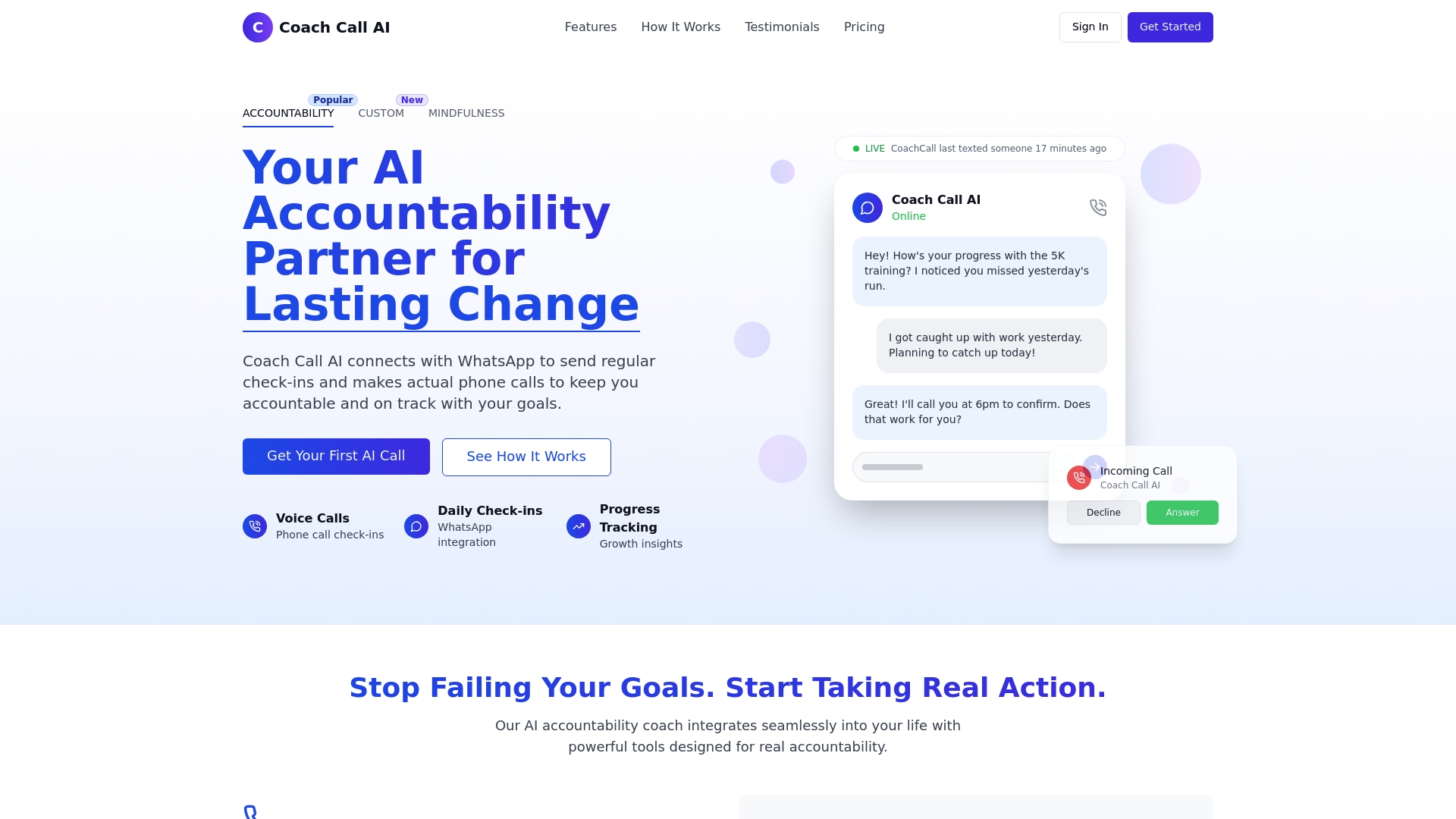
Busy professionals, students, and anyone juggling multiple priorities benefit from AI accountability that adapts to your schedule. Coach Call AI provides timely reminders, motivational check-ins, and dynamic adjustments to your plans, ensuring you stay on track without adding complexity to your day. Experience the difference between sporadic self-motivation and consistent, intelligent support designed to help you achieve sustained progress. Visit Coach Call AI to get started today.
FAQ
What are the most effective AI personal development techniques?
Gamified habit trackers, adaptive scheduling tools, and AI coaching voice calls rank as the most effective techniques. Gamification increases habit adherence by approximately 30%, while adaptive scheduling boosts productivity by up to 20%. Techniques that personalize recommendations based on user data and preferences consistently yield better accountability and goal progress than one-size-fits-all approaches.
How do AI tools protect my data privacy during personal development coaching?
Top platforms implement end-to-end encryption and data anonymization to secure your information during coaching sessions. You control what data is shared and can adjust privacy settings anytime. Look for platforms with transparent data policies and regular security audits to ensure your personal development information remains confidential.
Can AI personal development tools replace human coaches entirely?
AI increasingly replicates the motivational qualities of human coaches and can boost goal achievement rates by over 25%. However, combining AI accountability with occasional human guidance often yields the best outcomes, especially for complex emotional challenges or major life transitions that benefit from human empathy and nuanced advice.
Which AI tool is best for managing stress and mental well-being?
AI apps like Woebot combine emotional AI with cognitive behavioral therapy techniques for personalized mental health support. AI-powered mental health tools can reduce reported stress by up to 25% by providing 24/7 availability and tailored stress-reduction prompts. Choose tools that offer conversational interfaces and real-time mood detection for the most responsive support.