
Imagine boosting your productivity by over 30% simply by having a reliable partner who never misses a check-in. AI coaching can boost productivity by over 30%, offering consistent accountability where human partners often fall short. This article explains what AI coaching is, how its technology works, who benefits most, and how you can use it effectively to achieve your personal development goals.
Table of Contents
- What Is AI Coaching And How It Works
- How AI Coaching Achieves Accountability
- Target Audience And Benefits
- Common Misconceptions About AI Coaching
- AI Coaching Versus Human Coaching: A Comparison
- Practical Guide To Choosing And Using An AI Coaching Platform
- Explore Coach Call AI For Personalized Accountability
- Frequently Asked Questions
Key takeaways
| Point | Details |
|---|---|
| AI coaching uses natural language processing and machine learning to simulate personalized conversations | Technology enables human-like interactions through messaging apps and voice calls |
| It provides consistent accountability through automated check-ins and progress tracking | Scheduled interactions ensure reliable support without human availability issues |
| Busy professionals and students benefit most due to flexible integration with apps like WhatsApp | On-demand access fits tight schedules and meets users where they communicate |
| AI coaching complements, not replaces, human coaches by offering scalable support | Best used alongside human coaching for comprehensive personal development |
| Privacy and data security are critical for user trust and platform adoption | Encryption and user controls protect sensitive personal information |
What is AI coaching and how it works
AI coaching is personal development support powered by artificial intelligence that uses natural language processing and machine learning to deliver personalized guidance. Unlike traditional coaching apps that follow rigid scripts, AI coaching relies on natural language processing and machine learning to provide personalized interactions that feel genuinely conversational. The technology analyzes your responses, learns your patterns, and adapts its approach to match your communication style and goals.
Natural language processing allows AI coaches to understand context, emotion, and intent behind your words. When you text about struggling with morning routines, the AI recognizes frustration and responds with empathy rather than generic advice. Machine learning enables the system to improve over time, remembering your preferences, past successes, and obstacles you've mentioned before. This combination creates interactions that mimic human coaching conversations while offering the consistency machines provide.
Most AI coaching happens through familiar channels. You might receive a WhatsApp message asking about yesterday's goals, participate in a scheduled voice call reviewing weekly progress, or text your AI coach when you need motivation. AI coaching platforms with WhatsApp integration make support accessible without downloading new apps or learning complex interfaces. The AI processes your input instantly, providing real-time encouragement, actionable suggestions, or gentle accountability when you've missed a commitment.
The technology handles several coaching functions simultaneously. It tracks your progress toward multiple goals, celebrates milestones with personalized messages, identifies patterns in your behavior, and adjusts check-in frequency based on your engagement. This multi-tasking capability means one AI coach can provide support across fitness, productivity, and mental well-being goals without becoming overwhelmed or inconsistent.
How AI coaching achieves accountability
Accountability thrives on consistency, and AI delivers this better than human partners who juggle their own schedules and priorities. AI coaching increases goal adherence and productivity through scheduled check-ins and progress tracking, creating a reliable system that shows up every single time. The automated progress tracking feature logs every completed task, missed deadline, and milestone reached without requiring you to maintain spreadsheets or journals manually.

Scheduled digital check-ins via messaging apps ensure you face your commitments regularly. An AI coach might text you every morning asking about your three priorities for the day, then follow up each evening to review what you accomplished. These predictable touchpoints create structure that busy people crave but struggle to maintain with human accountability partners. The AI never cancels due to illness, forgets because of competing priorities, or judges you harshly for setbacks.
Quantitative improvements appear quickly with consistent AI coaching:
- Week one establishes baseline behavior and goal clarity through daily conversations.
- Week two introduces structured check-ins that highlight completion patterns.
- Week three celebrates early wins and identifies obstacles requiring strategy shifts.
- Week four demonstrates measurable progress through visual dashboards and streak tracking.
Milestone celebrations keep motivation high when progress feels slow. Your AI coach recognizes when you've maintained a streak, achieved a significant goal, or overcome a recurring obstacle. These celebrations arrive instantly, reinforcing positive behavior before the moment passes. Human coaches might wait for your next scheduled session to acknowledge progress, but AI responds in real time when dopamine hits matter most.
"The difference between AI and human accountability is like having a personal trainer who lives in your pocket versus one you see twice weekly. Both add value, but the pocket trainer catches you in moments of weakness."
AI accountability partners with phone calls and WhatsApp combine the convenience of text-based check-ins with the personal touch of voice conversations. This hybrid approach addresses different accountability needs throughout your week.
Target audience and benefits
Busy professionals juggling deadlines, meetings, and personal commitments find AI coaching particularly valuable because it provides support without adding calendar complexity. You don't schedule appointments weeks in advance or commute to sessions. Instead, coaching happens during your commute, lunch break, or evening wind-down through quick WhatsApp exchanges. This accessibility means support arrives when you actually need it, not when scheduling allows.
Students balancing coursework, part-time jobs, and social obligations benefit from AI coaching's flexibility and non-judgmental approach. Traditional academic advisors have limited availability, but an AI coach responds at midnight when anxiety about an upcoming exam peaks or motivation for studying wanes. The technology meets students where they spend significant time, AI coaching benefits for students and professionals by integrating seamlessly into existing digital communication habits.
Productivity improvements manifest through several mechanisms. AI coaching provides timely motivation exactly when procrastination tempts you, offers structure through daily priority setting, creates accountability for task completion, and identifies productivity patterns you might miss on your own. These elements combine to help users complete 25-40% more meaningful work weekly compared to unsupported attempts at self-management.
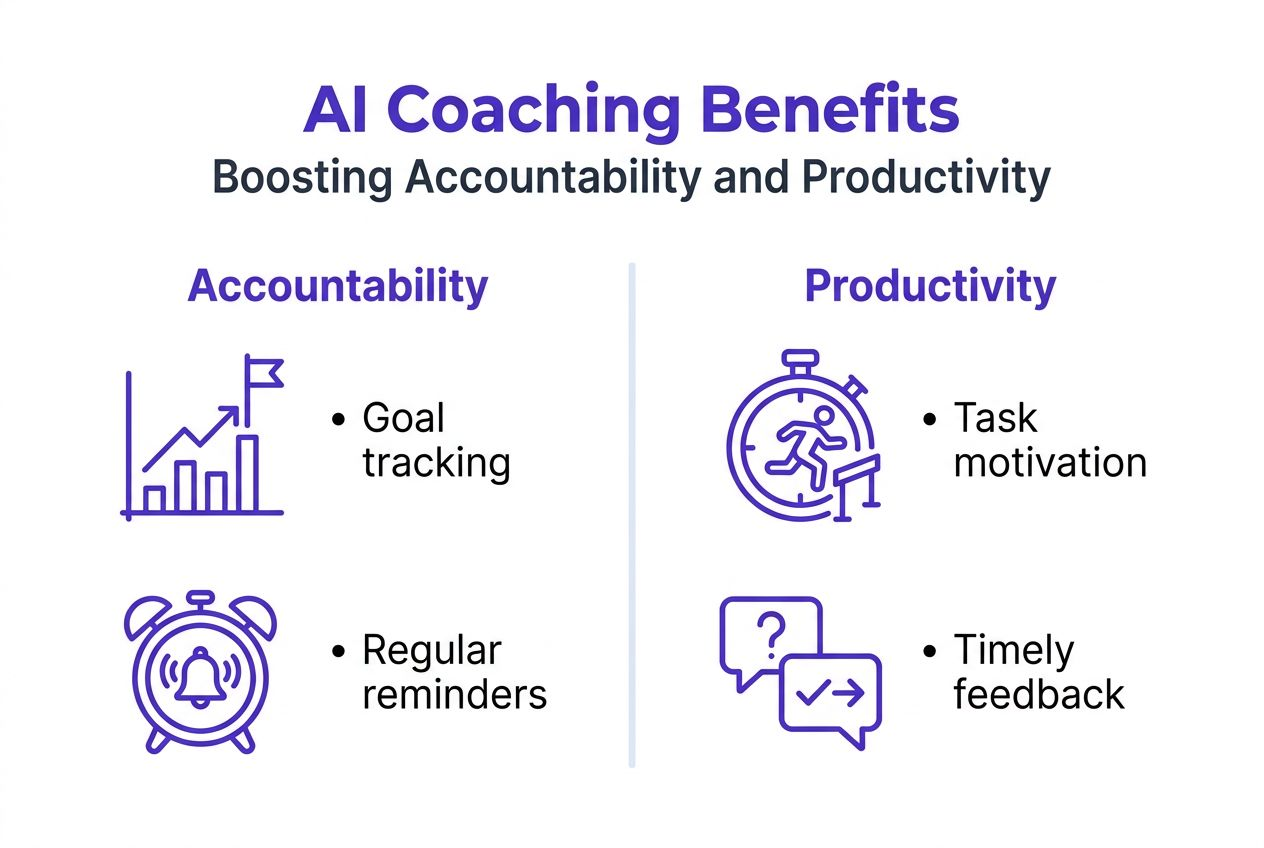
Mental well-being support comes through consistent encouragement and progress celebration. 85% of busy professionals and students report satisfaction with AI coaching accessibility; 70% report improved mental well-being due to regular positive interactions and reduced isolation in goal pursuit. The AI coach becomes a stable presence during challenging periods, offering perspective when stress overwhelms and celebrating wins when imposter syndrome minimizes achievements.
Pro Tip: Start AI coaching when you have moderate motivation rather than waiting for a crisis or peak enthusiasm. Building the relationship during stable periods makes the AI more effective when challenges arise.
Common misconceptions about AI coaching
Many people dismiss AI coaching as impersonal or robotic, imagining stiff chatbot responses devoid of warmth or understanding. Modern AI coaching uses advanced natural language processing to create genuinely natural conversations that acknowledge emotions, ask thoughtful follow-up questions, and remember personal details from previous interactions. You won't encounter the frustrating loops or obvious scripts that plagued early chatbots.
Another myth suggests AI coaching aims to replace human coaches entirely. The reality is more nuanced. AI cannot fully replicate the emotional empathy and deep intuitive understanding that experienced human coaches bring to complex psychological challenges. Instead, AI serves as a complementary tool that handles frequent check-ins, progress tracking, and motivation maintenance while human coaches focus on breakthrough sessions, strategic planning, and emotional processing that requires genuine human connection.
Some believe AI coaching works automatically without user effort, like a magic solution that achieves goals on your behalf. This misunderstanding sets people up for disappointment. AI coaching requires consistent engagement, honest self-reporting, and willingness to implement suggested strategies. The AI provides structure, accountability, and personalized guidance, but you must do the actual work of behavior change and goal pursuit.
Privacy concerns about AI accessing personal information and goal details are completely valid. Reputable AI coaching platforms address these through:
- End-to-end encryption for all messages and voice calls
- Clear data usage policies that prohibit selling user information
- User controls for data deletion and export
- Transparent AI training practices that anonymize personal details
Pro Tip: Before committing to any AI coaching platform, read the privacy policy specifically looking for statements about data selling, third-party access, and your rights to delete information. Legitimate platforms make these terms clear and accessible.
AI coaching versus human coaching: a comparison
Understanding when to use AI coaching versus human coaching helps you build an effective personal development strategy that leverages both tools appropriately. Each approach offers distinct advantages for different situations and needs.
| Aspect | AI Coaching | Human Coaching |
|---|---|---|
| Availability | 24/7 instant access via messaging and voice | Limited to scheduled sessions |
| Cost | $10-50 monthly for unlimited interactions | $100-300 per hour-long session |
| Consistency | Never misses check-ins or forgets commitments | Dependent on coach's schedule and reliability |
| Emotional depth | Recognizes emotions but lacks genuine empathy | Provides authentic emotional connection and intuition |
| Scalability | Supports unlimited simultaneous goals and users | Coach attention divided among multiple clients |
| Complex issues | Best for structured goals and behavioral tracking | Essential for trauma, relationships, and deep psychological work |
| Progress tracking | Automated data collection and visualization | Manual tracking or client self-reporting |
| Personalization | Adapts based on data patterns and stated preferences | Intuitive adjustments based on subtle human cues |
AI coaching excels when you need frequent touchpoints to maintain momentum on clear, structured goals like fitness routines, productivity habits, or skill development. The technology's ability to check in multiple times daily without fatigue makes it ideal for accountability-focused support. Users who thrive on data, appreciate consistent structure, and have well-defined objectives find AI coaching particularly effective.
Human coaching becomes essential when navigating ambiguous challenges, processing emotional complexity, or needing someone to challenge limiting beliefs with genuine care. A skilled human coach notices what you're not saying, asks uncomfortable questions that spark breakthroughs, and provides the authentic relationship that facilitates vulnerable self-exploration. Career transitions, relationship issues, identity questions, and healing from past trauma all benefit from human wisdom and empathy.
Many successful individuals use both approaches strategically. They engage AI coaching for daily accountability and progress tracking while scheduling monthly or quarterly human coaching sessions for strategic planning and emotional processing. This hybrid model maximizes the strengths of each approach while minimizing costs and scheduling constraints.
Practical guide to choosing and using an AI coaching platform
Selecting the right AI coaching platform starts with clarifying your personal development goals before evaluating technology features. Vague intentions like "be more productive" won't help you assess whether a platform meets your needs. Instead, define specific objectives such as "complete three deep work sessions daily" or "exercise four times weekly" that give the AI clear targets to support.
When evaluating platforms, prioritize these features:
- Integration with apps you already use daily like WhatsApp, Messenger, or SMS
- Voice call capabilities for more personal interaction beyond text
- Visual progress dashboards that show trends and patterns
- Customizable check-in schedules that match your routine
- Multiple coaching personas or conversation styles to prevent monotony
Privacy and data security deserve careful evaluation before sharing personal information with any AI platform. Review the privacy policy looking specifically for statements about data encryption, third-party sharing practices, your rights to access and delete data, and how long the platform retains your information. Reputable platforms make these policies accessible and easy to understand rather than burying critical details in legal jargon.
Implementing AI coaching effectively requires several intentional steps:
- Start with one or two focused goals rather than overwhelming the system and yourself.
- Respond honestly to check-ins even when reporting setbacks or missed commitments.
- Engage consistently for at least three weeks to establish patterns the AI can learn.
- Review progress visualizations weekly to identify obstacles and celebrate improvements.
- Adjust goals and check-in frequency based on what the data reveals about your patterns.
Plan specific times for AI coaching interactions rather than treating them as optional activities you'll handle "when you have time." Schedule morning check-ins during your commute, evening reviews while preparing dinner, or weekly voice calls during Sunday planning sessions. This intentional scheduling ensures coaching becomes routine rather than sporadic.
When you choose an AI coaching platform, look for free trials or money-back guarantees that let you test whether the interaction style and features match your preferences before committing financially. The best platform is one you'll actually use consistently, not necessarily the one with the most features.
Explore Coach Call AI for personalized accountability
If you're ready to experience how AI coaching transforms accountability and productivity, Coach Call AI offers exactly what this article describes. The platform combines natural language AI coaching with convenient phone and WhatsApp check-ins designed specifically for busy lifestyles. You get reliable, personalized accountability that fits your schedule rather than forcing you to adapt to rigid coaching appointments.
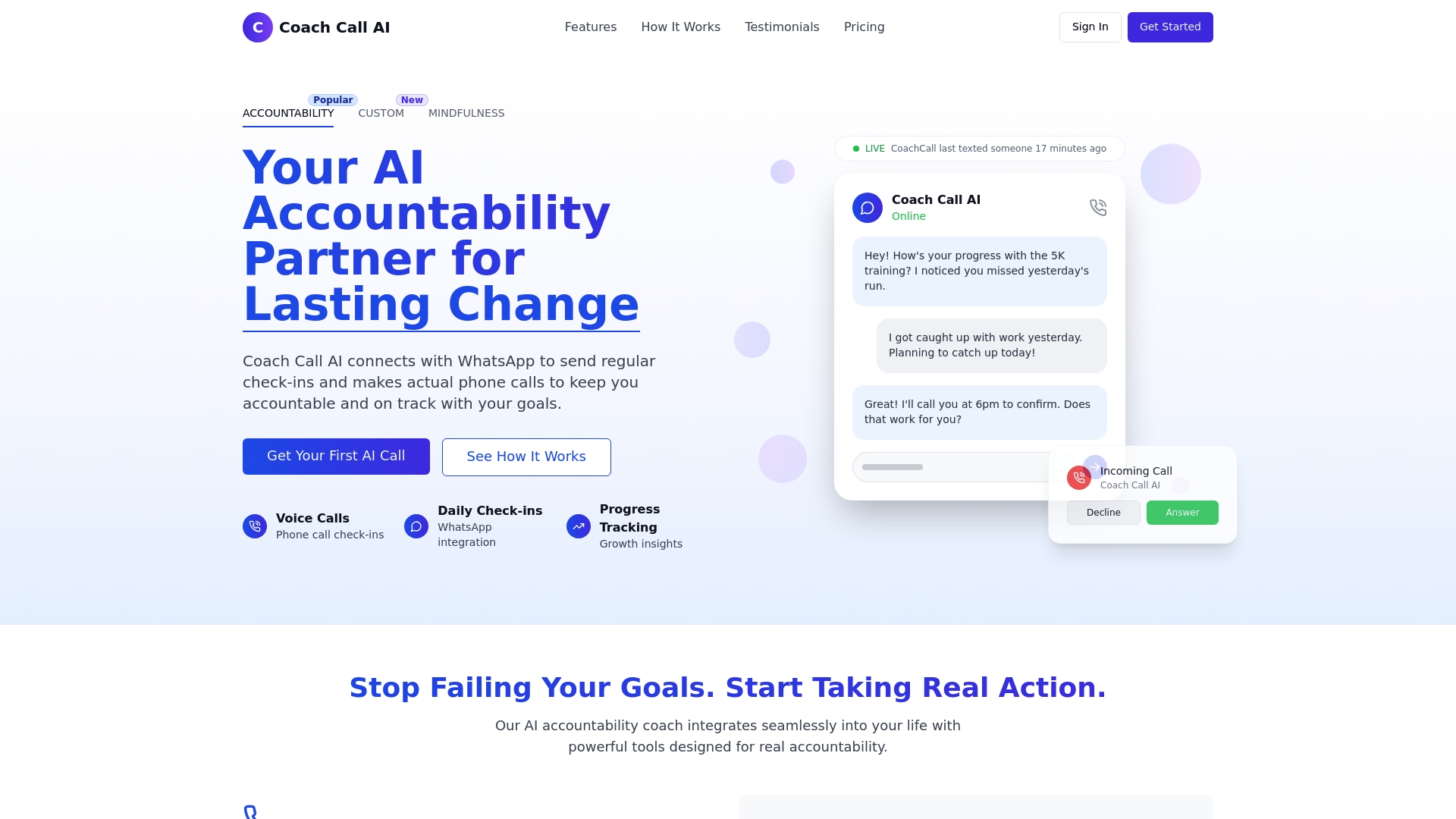
The Coach Call AI platform provides automated progress tracking, milestone celebrations, and scheduled voice calls that make support feel personal and engaging. Whether you're a professional managing multiple projects or a student balancing coursework with other commitments, the system adapts to your goals and communication preferences. Try Coach Call AI to discover how scalable, flexible AI support can help you achieve more while maintaining the mental well-being that comes from consistent encouragement and genuine progress.
Frequently asked questions
What makes AI coaching different from human coaching?
AI coaching provides instant 24/7 availability and consistent check-ins without scheduling constraints, while human coaching offers deeper emotional empathy and intuitive understanding of complex psychological challenges. AI excels at frequent accountability and progress tracking for structured goals, whereas humans handle nuanced situations requiring genuine emotional connection. Most people benefit from using both strategically.
Is AI coaching effective for busy professionals and students?
Yes, particularly because it integrates with communication apps you already use and provides support during odd hours when traditional coaches aren't available. Research shows 85% of busy professionals and students report satisfaction with AI coaching accessibility, and 70% experience improved mental well-being from consistent encouragement. The flexibility to engage during commutes, breaks, or late-night study sessions makes AI coaching ideal for packed schedules.
How does AI coaching protect my privacy?
Reputable AI coaching platforms use end-to-end encryption for all messages and voice calls, preventing unauthorized access to your personal information and goal details. They provide clear privacy policies that explain data usage, prohibit selling user information to third parties, and give you controls to export or delete your data anytime. Always review a platform's privacy policy before sharing sensitive information.
What should I look for when choosing an AI coaching platform?
Prioritize platforms that integrate with apps you already use like WhatsApp, offer both text and voice interaction options, provide visual progress tracking, and allow customizable check-in schedules. Review privacy policies carefully for data protection practices and user rights. Look for free trials to test whether the AI's conversation style and features match your preferences before committing.
Can AI coaching replace my human coach?
AI coaching complements rather than replaces human coaching by handling frequent check-ins and progress tracking while human coaches focus on emotional processing and strategic breakthroughs. Use AI for daily accountability on structured goals and schedule human coaching sessions for complex psychological challenges, relationship issues, or situations requiring genuine empathy. The hybrid approach maximizes benefits while managing costs and time constraints effectively.