
Have you set fitness, productivity, or wellness goals only to abandon them within weeks? You're not alone. 92% of goals fail due to inconsistent accountability, often because traditional human accountability partners cancel or become unavailable. AI-powered accountability through WhatsApp offers a reliable alternative, providing consistent check-ins, motivational voice calls, and personalized support that adapts to your schedule. This guide shows you how to leverage AI accountability to finally achieve sustainable personal growth.
Table of Contents
- The Accountability Gap In Personal Goal Achievement
- Prerequisites: Preparing For AI Accountability Success
- Step-By-Step Process For Using AI Accountability
- Troubleshooting Common Challenges With AI Accountability
- Expected Results: Benchmarks For Success With AI Accountability
- Why Choose AI Accountability For Sustainable Goal Achievement
- Discover Coach Call AI For Your Accountability Needs
- Frequently Asked Questions About AI Accountability And Achieving Personal Goals
Key takeaways
| Point | Details |
|---|---|
| AI solves reliability issues | AI accountability partners provide 24/7 support without cancellations or scheduling conflicts that plague human partners. |
| WhatsApp simplifies engagement | Platform integration eliminates app-switching barriers and leverages familiar messaging habits for seamless daily interaction. |
| Voice calls boost motivation | AI voice interactions increase engagement by 30% compared to text-only support through personalized coaching conversations. |
| Customization drives retention | Personality-matched AI coaches and flexible scheduling create sustainable routines that adapt to busy lifestyles. |
| Progress tracking reinforces habits | Automated milestone celebrations and visual progress dashboards maintain motivation through measurable achievements. |
The accountability gap in personal goal achievement
Most personal development journeys fail before they begin. The primary culprit isn't lack of desire or poor planning. It's the absence of consistent accountability.
Traditional accountability relies on friends, family, or hired coaches who have their own schedules, priorities, and life complications. Your workout buddy gets sick. Your productivity partner lands a demanding project. Your wellness coach takes vacation. These disruptions create gaps where motivation dies and habits crumble.
AI accountability eliminates this unreliability. People who schedule regular check-ins with accountability partners have a 65% higher success rate in achieving their goals. AI systems deliver this consistency without human limitations, offering 24/7 availability through platforms you already use daily.
WhatsApp-based AI accountability partner features transform your smartphone into a personal coaching hub. The platform sends timed check-ins asking about your progress, celebrates your wins, and gently redirects you when you slip. Unlike text-only apps, AI voice calls increase engagement metrics by up to 30% compared to text-only support by creating human-like conversations that feel authentic and motivating.
Consider these accountability advantages:
- No scheduling conflicts or cancellations disrupting your routine
- Personalized check-ins timed to your specific goals and preferences
- Voice interactions that provide emotional support beyond cold text messages
- Automatic progress tracking that visualizes your journey without manual logging
- Privacy-focused systems that keep your personal development data secure
The technology mimics human coaching patterns while eliminating human inconsistency. For busy professionals juggling careers and personal growth, or students balancing academics with wellness goals, this reliability creates the foundation for sustainable change.
Prerequisites: preparing for AI accountability success
Before diving into AI-powered accountability, establish the right foundation. Success requires more than downloading an app. You need the right tools, mindset, and preparation.
Start with basic technology requirements. You'll need a smartphone with WhatsApp installed and reliable internet connectivity. Most AI accountability platforms integrate exclusively with WhatsApp because of its widespread adoption and familiar interface, making the barrier to entry remarkably low.
Define your goals with precision. Vague aspirations like "get healthier" fail because they lack measurable markers. Instead, focus on specific behaviors: "Exercise 30 minutes daily" or "Complete three deep work sessions weekly." AI systems thrive on clarity, using your defined targets to customize check-ins and measure progress accurately.
Commit to regular interaction. AI accountability only works when you engage consistently with check-ins and scheduled calls. This isn't passive tracking where an app monitors your steps in the background. You'll receive daily messages requiring responses and participate in voice calls that demand your attention. Block time for these interactions in your calendar.
Essential preparation steps include:
- Installing WhatsApp and ensuring notification permissions are enabled
- Clearly articulating 1-3 primary goals focused on fitness, productivity, or mental well-being
- Identifying your most vulnerable times when accountability will have maximum impact
- Being comfortable with both text messaging and voice call features
- Understanding privacy policies and data usage for your chosen platform
Pro Tip: Start with a single goal rather than overwhelming yourself with multiple objectives. Master consistent engagement with one area before expanding your accountability scope.
Mindset matters as much as technology. Approach AI accountability with realistic expectations. The AI won't physically drag you to the gym or delete distracting apps from your phone. It provides structure, motivation, and consistent reminders, but execution remains your responsibility. View it as a supportive partner rather than a magical solution.
Privacy awareness completes your preparation. Setting up AI accountability requires sharing personal information about your goals, habits, and progress. Verify that your chosen platform encrypts conversations and provides clear data handling policies. WhatsApp AI coaching advantages include end-to-end encryption, but confirm specific privacy protections before sharing sensitive personal development details.
Step-by-step process for using AI accountability
Implementing AI accountability follows a structured path from initial setup through daily engagement. Each phase builds on the previous, creating a comprehensive support system.
Step 1: Create your account and connect WhatsApp
Visit your chosen AI accountability platform and complete registration. Coach Call AI integrates with WhatsApp for daily messages and real voice calls to mimic human coaching, so you'll authorize the platform to communicate through your WhatsApp number. This connection enables seamless messaging without switching between multiple apps.
Step 2: Select your AI coach personality
Personalization starts with choosing a coaching style that matches your motivational preferences. Options typically include empathetic (supportive and understanding), firm (direct and challenging), or neutral (balanced and factual). Your selection determines conversation tone, motivational messaging style, and how the AI responds to both successes and setbacks.
Step 3: Define clear behavior-based goals
Input specific, measurable objectives within the platform. Focus on actions rather than outcomes. Instead of "Lose 20 pounds," specify "Track meals daily and exercise 5 times weekly." The AI uses these behavioral targets to structure check-ins and measure progress accurately.
Step 4: Configure check-in frequency and timing
Customize when and how often you receive accountability messages. Most platforms offer flexibility ranging from multiple daily check-ins to weekly summaries. Align timing with your natural routines. Schedule morning check-ins before workouts or evening reflections after work hours.
Step 5: Engage with daily WhatsApp check-ins
Respond promptly to AI messages asking about your progress. Brief replies work fine. "Completed 30-minute run" or "Skipped workout today, feeling tired" both provide valuable data. Consistent engagement trains the AI to recognize your patterns and adjust support accordingly.
Step 6: Participate in scheduled voice calls
Join AI-initiated voice calls at your designated times. These conversations feel remarkably human, offering encouragement, exploring obstacles, and strategizing solutions. Voice interaction creates accountability depth that text messaging alone cannot achieve.
Step 7: Monitor your progress dashboard
Regularly review automated tracking visualizations showing your consistency, streaks, and milestone achievements. This data reinforces positive behaviors and highlights areas needing attention without manual logging effort.

| Setup Phase | Key Actions | Time Required |
|---|---|---|
| Initial Setup | Account creation, WhatsApp connection, personality selection | 10-15 minutes |
| Goal Configuration | Define specific behavioral targets, set check-in schedule | 15-20 minutes |
| Daily Engagement | Respond to check-ins, participate in voice calls | 5-10 minutes daily |
| Weekly Review | Analyze progress dashboard, adjust goals as needed | 10-15 minutes weekly |
Pro Tip: Set your first voice call for a time when you're relaxed and can focus. This initial conversation establishes rapport and helps the AI understand your communication preferences, making future interactions feel more natural and personalized.
The Coach Call AI setup guide walks you through these steps with platform-specific instructions. Most users complete initial configuration within 30 minutes and establish comfortable daily routines within the first week. The AI accountability system setup process prioritizes simplicity, recognizing that complicated systems become abandonment points rather than support mechanisms.
Troubleshooting common challenges with AI accountability
Even well-designed accountability systems encounter obstacles. Recognizing and addressing these challenges early prevents abandonment and maintains momentum.
Inconsistent check-in engagement
Life gets busy and responding to AI messages falls off your priority list. When this happens, adjust your check-in schedule rather than abandoning the system entirely. Reduce frequency from daily to every other day, or shift timing to match your most consistent availability windows.
Motivation dips despite regular contact
AI accountability provides structure, but it can't manufacture intrinsic motivation. If you're going through motions without genuine engagement, switch your AI coach personality. An empathetic style might provide needed encouragement during difficult periods, while a firmer approach could reignite discipline when you're slacking.
Outcome obsession derailing progress
Focusing exclusively on end results rather than daily behaviors creates frustration. If you're constantly checking weight scales or productivity metrics without celebrating consistent execution, refocus your goals on process rather than outcomes. AI systems track behavioral consistency more effectively than final results anyway.
Privacy concerns limiting honest sharing
Privacy and data security affect user trust, with breaches reducing engagement by up to 40%. If you're hesitant to share truthful progress updates due to privacy worries, verify your platform's encryption standards and data handling policies. Enable all available privacy settings and understand exactly how your information is used and stored.
Scheduling conflicts with voice calls
Missed voice calls create guilt and disrupt accountability rhythm. Sync your AI accountability troubleshooting calendar with your primary schedule, blocking call times as non-negotiable appointments. If conflicts persist, adjust call frequency to weekly rather than daily until your routine stabilizes.
Common pitfall solutions:
- Enable notification reminders if you're forgetting to respond to check-ins
- Temporarily reduce goal difficulty during high-stress periods rather than abandoning completely
- Use voice calls strategically for motivation boosts rather than routine check-ins when time-pressed
- Request AI coaching style adjustments when current approach feels mismatched
- Review and update goal definitions every 2-3 weeks as circumstances evolve
Pro Tip: Create a backup accountability trigger for days when you miss AI check-ins. Set a personal reminder to review your progress dashboard before bed, maintaining self-awareness even when engagement lapses.
The AI vs human accountability tradeoffs discussion reveals that technology-based systems excel at consistency but require user discipline for honest engagement. When challenges arise, treat them as calibration opportunities rather than system failures. Adjust parameters, modify goals, or change interaction frequency until you find a sustainable rhythm.
Expected results: benchmarks for success with AI accountability
Understanding realistic outcomes helps you gauge progress and maintain motivation through your accountability journey. Results vary based on consistency, goal difficulty, and personal circumstances, but clear benchmarks exist.
Accountability partner apps boost follow-through rates from around 65% to as high as 95% compared to solo efforts. This dramatic improvement stems from external structure combating internal resistance. When you know someone or something will check on your progress, skipping becomes harder to justify.
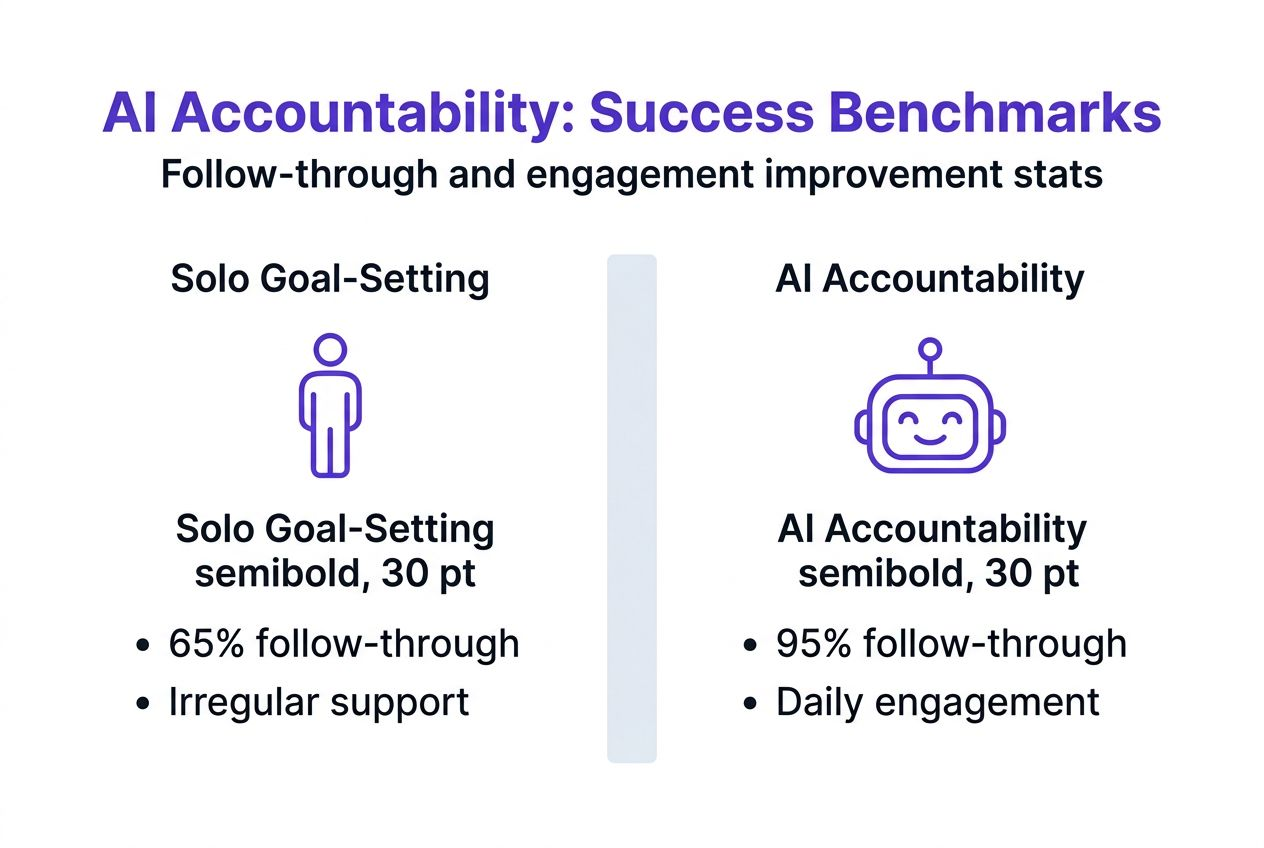
Timeline expectations matter. Most users experience noticeable improvements within 3-6 weeks of consistent AI engagement. Early gains often come from increased awareness rather than perfect execution. Simply tracking behaviors daily makes you more conscious of choices and patterns.
Voice call features significantly impact results. Platforms incorporating vocal interactions report 30% higher engagement metrics compared to text-only systems. The human-like quality of spoken conversations creates emotional connections that written messages cannot replicate, strengthening commitment during vulnerable moments.
| Timeframe | Expected Progress | Key Indicators |
|---|---|---|
| Week 1-2 | Establishing routine, learning platform features | Daily check-in response rate above 80%, completing initial voice calls |
| Week 3-6 | Building consistency, early habit formation | Maintaining 5-6 day streaks, noticing pattern improvements |
| Week 7-12 | Solidifying habits, achieving initial milestones | Consistent goal completion rates above 70%, reduced motivation fluctuations |
| Month 4+ | Sustained success, goal evolution | Automatic behavior execution, expanding or refining objectives |
Milestone celebrations play crucial roles in sustained engagement. AI systems that recognize and acknowledge achievements, whether completing 30-day streaks or hitting specific targets, reinforce positive behaviors through dopamine-triggering recognition. This gamification element maintains motivation beyond initial enthusiasm.
Realistic success metrics include:
- Responding to 70-80% of check-ins consistently over multi-week periods
- Completing scheduled voice calls with less than 20% miss rate
- Maintaining goal-aligned behaviors 5-6 days weekly rather than perfect execution
- Experiencing reduced decision fatigue around targeted behaviors
- Achieving specific behavioral milestones within 8-12 week windows
Pro Tip: Track your "accountability engagement rate" separately from goal completion rate. Consistent interaction with the AI system predicts long-term success better than perfect behavior execution, because engagement drives gradual improvement while perfection pressure causes abandonment.
The benefits of AI accountability extend beyond immediate goal achievement. Users report improved self-awareness, better understanding of personal motivation patterns, and increased confidence in their ability to sustain challenging behaviors. These secondary benefits often prove more valuable than the original objectives themselves.
Why choose AI accountability for sustainable goal achievement
AI accountability represents a fundamental shift in personal development support, addressing limitations that have plagued traditional methods for decades.
Consistency defines the primary advantage. Human accountability partners bring their own schedules, moods, and availability constraints. Your friend might be enthusiastic about morning runs for two weeks before losing interest. Your hired coach might raise rates or move to a different time zone. AI systems maintain identical engagement levels indefinitely, providing reliable support regardless of external circumstances.
Platform integration reduces friction dramatically. WhatsApp's widespread use and familiar interface increase engagement and reduce user friction compared to standalone apps requiring separate logins and notifications. You're already checking WhatsApp multiple times daily. AI accountability meets you where you are rather than demanding behavioral changes before support even begins.
Personalization at scale becomes possible through AI. A human coach manages limited clients and cannot customize communication style, timing, and approach for dozens of people simultaneously. AI systems adjust personality, message tone, and interaction frequency individually for each user, creating bespoke experiences without capacity constraints.
"The best accountability partner is the one who shows up consistently, adapts to your needs, and never judges your setbacks. AI makes this ideal finally accessible to everyone seeking personal growth."
Scheduling flexibility accommodates unpredictable lifestyles. Busy professionals working irregular hours and students balancing fluctuating academic demands need support systems that adapt rather than impose rigid structures. AI accountability shifts check-in times, adjusts call schedules, and modifies engagement intensity based on your current capacity.
Core advantages include:
- Zero cancellations or scheduling conflicts disrupting your accountability routine
- Judgment-free environment encouraging honest progress reporting without embarrassment
- Instant availability for motivation during vulnerable moments when willpower weakens
- Data-driven insights revealing patterns you cannot recognize through subjective self-assessment
- Scalable support expanding from one goal to multiple objectives without additional cost
Voice interaction technology bridges the empathy gap that previously separated AI from human coaches. Modern natural language processing creates conversations feeling remarkably authentic, delivering emotional support that text-based systems cannot match. This human-like quality sustains engagement through inevitable motivation valleys.
The AI accountability benefits overview demonstrates how technology-based systems outperform traditional methods not by replacing human connection entirely, but by providing reliable foundation support that humans deliver inconsistently. For sustainable goal achievement, consistency trumps occasional intensity every time.
Discover Coach Call AI for your accountability needs
Ready to transform your personal development journey with reliable AI support? Coach Call AI platform delivers everything discussed in this guide through one integrated solution.
Experience personalized coaching through WhatsApp voice calls and daily messages tailored to your specific goals. Choose from multiple AI personality styles matching your motivational preferences, whether you need empathetic encouragement or direct challenge. Flexible scheduling adapts to your busy lifestyle, with automatic progress tracking visualizing your journey without manual logging effort.
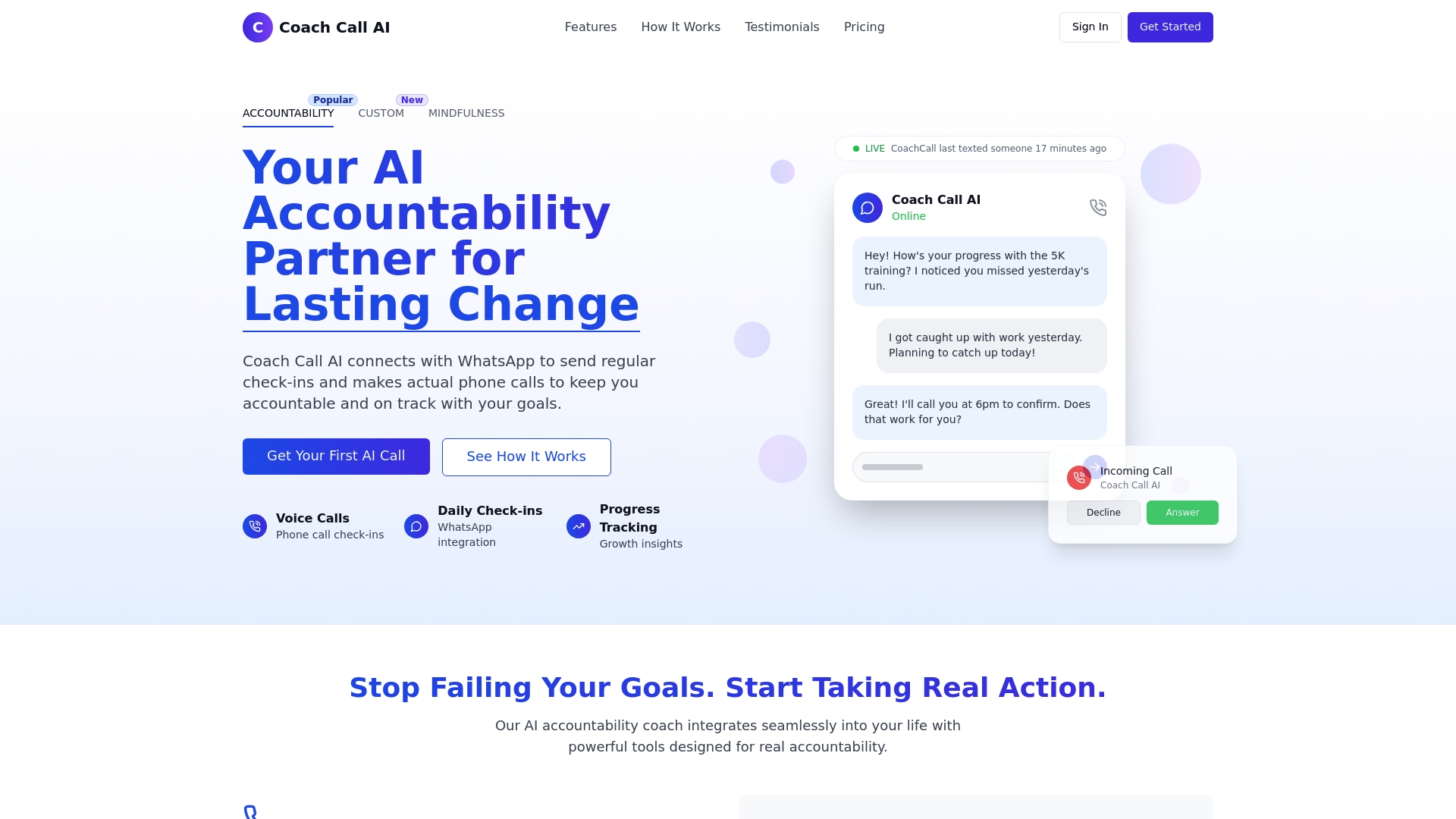
Ideal for busy professionals seeking consistent support between demanding work schedules and students balancing academic pressures with wellness goals, Coach Call AI replaces unreliable human partners with AI that shows up every single day. Start building sustainable habits with accountability that never cancels, never judges, and never stops believing in your potential for growth.
Frequently asked questions about AI accountability and achieving personal goals
How does AI accountability differ from fitness tracking apps?
Fitness trackers passively monitor activity without interactive support. AI accountability actively engages through conversations, asks about your progress, provides motivation during difficult moments, and adapts coaching based on your responses. It's the difference between data collection and dynamic partnership.
Can AI accountability work for non-fitness goals like productivity?
Absolutely. AI accountability applies to any behavior-based goal including work productivity, creative projects, learning new skills, or mental wellness practices. The system adapts check-in questions and motivational messaging to your specific objective, whether that's completing deep work sessions or maintaining meditation streaks.
What happens if I miss several days of check-ins?
Most AI accountability systems send gentle reminder messages without judgment, then adjust engagement frequency if you remain unresponsive. When you return, the AI acknowledges the gap and helps you restart without dwelling on the missed period. Consistency matters more than perfection, and good systems recognize this.
Is my personal goal data secure with AI accountability platforms?
Reputable platforms use end-to-end encryption for WhatsApp conversations and maintain strict privacy policies regarding data usage. Always review terms of service before sharing sensitive information. Look for explicit statements about data encryption, storage practices, and whether your information trains broader AI models or remains private to your account.
How long before I see results from AI accountability?
Most users notice improved consistency within 3-6 weeks of regular engagement. Early improvements stem from increased awareness rather than perfect execution. The external structure makes skipping harder to justify, gradually building habits that eventually become automatic. Sustainable change requires patience, but consistent AI support accelerates the timeline significantly compared to solo efforts.