
Think coaching is all talk and reflection? Most people do, and that's exactly why traditional coaching often fails to deliver lasting change. Behavioral coaching flips this assumption by focusing exclusively on measurable actions rather than endless conversation. Instead of exploring feelings or motivations for weeks, behavioral coaches identify specific behaviors, track progress with data, and use proven techniques like reinforcement and modeling to create real transformation. For individuals seeking continuous self-improvement and accountability, this action-driven approach offers a practical path to achieving fitness goals, boosting productivity, and building sustainable habits. This guide breaks down how behavioral coaching works, what research says about its effectiveness, and how digital AI tools are making these powerful techniques accessible to anyone committed to personal growth.
Table of Contents
- Key takeaways
- What is behavioral coaching? Defining the action-focused approach
- Evidence behind behavioral coaching effectiveness
- Behavioral coaching in digital self-improvement tools
- Challenges and ethical considerations in behavioral coaching
- Explore AI-powered behavioral coaching with Coach Call AI
- Frequently asked questions about behavioral coaching
Key Takeaways
| Point | Details |
|---|---|
| Action focused coaching | Behavioral coaching centers on specific measurable behaviors and uses reinforcement and modeling to drive real change. |
| Stakeholder feedback goals | Coaches gather input from stakeholders to identify which behaviors matter most, and align actions with clear goals. |
| Detailed action plans | Plans specify when, where, and how to perform target behaviors and establish accountability measures. |
| AI driven accountability | Digital platforms track actions, send reminders, and provide personalized feedback to reinforce progress. |
| Proven effectiveness | Meta analyses show moderate to large effects on goal attainment and performance, with productivity gains of 20 to 40 percent when coaching includes specific behavioral targets. |
What is behavioral coaching? Defining the action-focused approach
Behavioral coaching is an action-oriented approach focusing on specific, measurable behavior changes using reinforcement, shaping, modeling, and behavioral contracting. Unlike traditional coaching that explores thoughts and emotions extensively, behavioral coaching zeroes in on what you actually do. The coach and client identify concrete behaviors to change, then apply systematic techniques to make those changes stick.
Four core modalities drive behavioral coaching effectiveness:
- Reinforcement uses rewards and consequences to strengthen desired behaviors and reduce unwanted ones
- Shaping breaks complex behaviors into small steps, rewarding progress toward the final goal
- Modeling demonstrates target behaviors so clients can observe and replicate successful actions
- Behavioral contracting creates formal agreements specifying behaviors, timelines, and accountability measures
The coaching cycle begins with gathering stakeholder feedback to identify which behaviors matter most. You and your coach select key behaviors tied directly to your goals, whether that's exercising four times weekly, completing projects on deadline, or practicing mindfulness daily. Next comes creating detailed action plans that specify when, where, and how you'll perform target behaviors. Regular check-ins provide accountability and allow adjustments based on what's working.
This measurable approach differs sharply from mental-state coaching, which focuses on beliefs, emotions, and cognitive patterns. Behavioral coaching asks "What will you do differently?" rather than "How do you feel about this?" Both approaches have value, but behavioral methods excel when you need concrete habit changes fast. The emphasis on observable actions makes progress easy to track and celebrate.
Digital platforms like AI coaching tools now automate many behavioral coaching functions. These systems track your actions, send timely reminders, and deliver personalized feedback based on your performance data. The combination of human coaching principles with AI consistency creates powerful accountability that traditional methods struggle to match.
Evidence behind behavioral coaching effectiveness
Research consistently demonstrates that behavioral coaching produces substantial improvements across workplace and athletic domains. Meta-analyses show moderate to large effects on goal attainment and performance from workplace coaching including behavioral techniques. These studies aggregate results from dozens of coaching interventions, revealing effect sizes that translate to meaningful real-world gains.
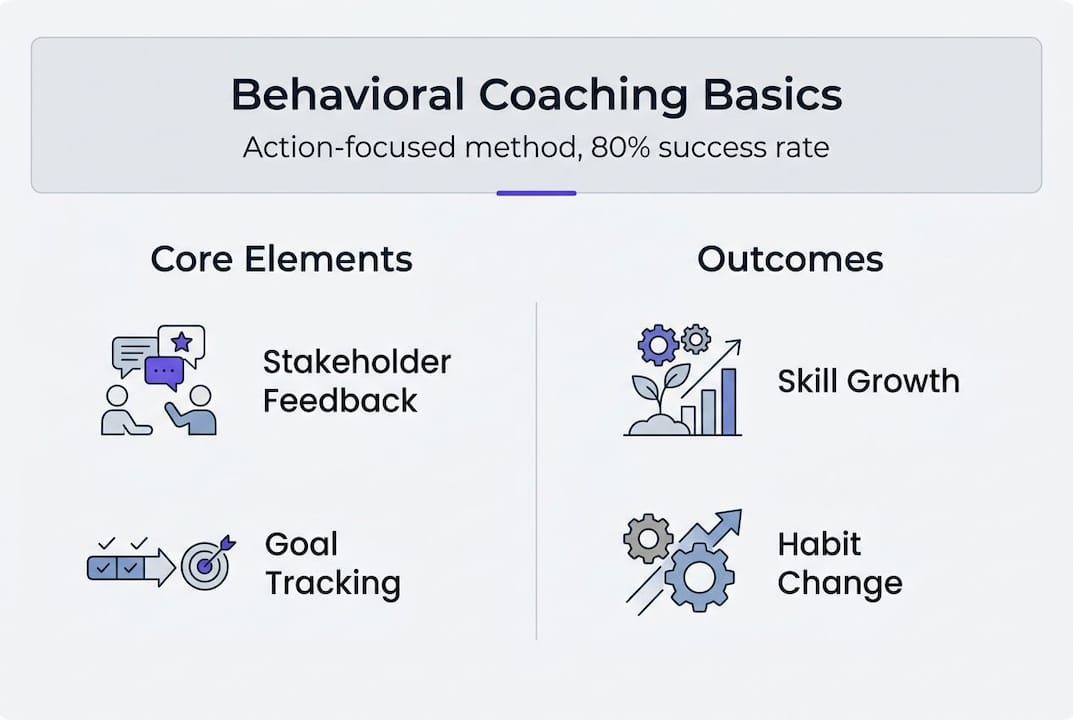
In workplace settings, employees receiving behavioral coaching show measurable improvements in skill acquisition, goal completion rates, and job performance metrics. Organizations report productivity increases of 20 to 40 percent when coaching includes specific behavioral targets rather than general development conversations. The structured nature of behavioral approaches makes outcomes easier to quantify compared to purely reflective coaching models.

Athletic research provides equally compelling evidence. Positive coach behaviors correlate with better performance and lower psychological fatigue in competitive sports. Coaches who demonstrate supportive behaviors, provide clear feedback, and model desired techniques help athletes achieve faster skill development and maintain motivation over long training cycles. Democratic coaching styles that involve athletes in goal setting produce particularly strong results.
| Context | Effect size | Key outcomes |
|---|---|---|
| Workplace coaching | Moderate to large (d = 0.5 to 0.8) | Goal attainment, skill development, performance improvement, psychological well-being |
| Sports coaching | Moderate (r = 0.3 to 0.5) | Enhanced performance, reduced fatigue, better technique, sustained motivation |
| Digital behavioral apps | Small to moderate | Increased activity levels, habit formation, engagement rates above 70% |
Behavioral coaching delivers several measurable benefits:
- Improved technical skills through deliberate practice guided by specific behavioral targets
- Higher goal attainment rates when behaviors are clearly defined and regularly monitored
- Enhanced psychological outcomes including confidence, self-efficacy, and reduced stress
- Sustained behavior change beyond the coaching period due to habit formation
- Objective progress tracking that motivates continued effort and celebrates milestones
One researcher noted:
Behavioral coaching's strength lies in its specificity. When clients know exactly what actions to take and receive immediate feedback on performance, change happens faster and lasts longer than with abstract goal setting alone.
The evidence becomes even more compelling when behavioral coaching integrates with technology. Hybrid coaching approaches boost goal adherence by 30 percent by combining human expertise with AI-driven accountability. Digital systems never forget to check in, never judge your setbacks, and provide consistent support that amplifies behavioral coaching principles.
Behavioral coaching in digital self-improvement tools
Digital platforms have revolutionized how behavioral coaching reaches individuals seeking continuous improvement. AI fine-tuned language models sending personalized messages increase activity and engagement in fitness and productivity apps. These systems analyze your behavior patterns, identify optimal intervention moments, and deliver motivating nudges precisely when you need them most.
The rise of behavioral science in app design reflects growing understanding of what drives lasting habit change. Developers now build features around core behavioral principles: immediate reinforcement through progress tracking, social modeling via community features, and behavioral contracting through goal commitment interfaces. Apps that integrate these elements consistently outperform generic reminder tools.
Real-world success stories demonstrate digital behavioral coaching's impact. Apps like Couch to 5K drive habit change with high user ratings and millions engaged worldwide. The app uses progressive shaping by breaking running goals into manageable intervals, reinforces completion with celebratory messages, and models success through community testimonials. Users report not just completing the program but maintaining running habits years later.
Key features that make digital behavioral coaching effective include:
- Personalized nudges timed to your schedule and behavior patterns to prompt action at optimal moments
- Continuous accountability tracking that records every workout, task completion, or habit instance without manual logging
- Adaptive feedback systems that adjust difficulty, messaging tone, and intervention frequency based on your progress
- Visual progress dashboards showing behavior streaks, milestone achievements, and trend analysis to maintain motivation
- Integration with daily tools like WhatsApp or calendar apps to reduce friction and embed coaching in existing routines
Fitness apps demonstrate behavioral coaching principles most visibly. They set specific exercise targets, track completion automatically via phone sensors, and deliver immediate positive reinforcement when you hit goals. Productivity apps apply similar logic to work habits, breaking projects into behavioral tasks and celebrating each completion. Mental well-being apps use behavioral activation techniques, prompting specific activities known to improve mood rather than just tracking feelings.
Pro Tip: Choose digital coaching tools that emphasize ongoing feedback cycles rather than one-time goal setting. Apps that check in multiple times daily and adjust based on your responses create the continuous accountability loop that drives lasting behavioral change.
AI coaching platforms take personalization further by learning your unique patterns. If you consistently skip morning workouts but complete evening sessions, the system shifts reminders accordingly. If motivational messages work better than instructional ones for you, the AI adapts its communication style. This level of customization was impossible with human coaches managing dozens of clients but becomes scalable through technology.
The combination of self-improvement strategies with AI and behavioral science creates a powerful toolkit for anyone serious about personal growth. You get the structure and expertise of professional coaching without scheduling constraints or high costs. The technology handles routine accountability tasks while you focus energy on actually performing target behaviors. For individuals balancing busy schedules with ambitious self-improvement goals, digital behavioral coaching offers practical support that fits seamlessly into daily life.
Platforms designed specifically for accountability, like those offering AI-powered personal development support, combine voice interactions with behavioral tracking to create comprehensive coaching experiences. These tools don't replace human connection but augment it with consistent, judgment-free support that shows up exactly when you need it.
Challenges and ethical considerations in behavioral coaching
Despite proven effectiveness, behavioral coaching faces significant challenges that practitioners and users must navigate carefully. Intangible behaviors are difficult to measure; skilled coaches are needed to avoid resentment; ethical issues like manipulation and privacy are critical concerns. Not every important behavior lends itself to simple quantification, creating tension between what matters and what's measurable.
Subjective behaviors like "being more confident" or "communicating authentically" resist the precise definition that behavioral coaching requires. Coaches sometimes force these concepts into observable proxies that miss the essence of what clients actually want to change. A client seeking confidence might get coached to "make eye contact for three seconds" or "speak up twice per meeting," but these behaviors don't automatically create genuine confidence. The risk is optimizing metrics that don't reflect true progress.
Client resistance poses another substantial challenge. When feedback comes from stakeholders or when goals feel imposed rather than self-chosen, resentment builds quickly. Behavioral coaching's directive nature can trigger defensiveness if the coach pushes too hard or dismisses a client's concerns about feasibility. People need autonomy in selecting which behaviors to change, even within a structured coaching framework. Skilled coaches balance structure with flexibility, adjusting targets when clients signal that current goals aren't working.
Ethical concerns intensify with digital behavioral coaching:
- Privacy violations when apps collect detailed behavior data without clear consent or adequate security protections
- Manipulation risks through persuasive design techniques that prioritize engagement over user well-being
- Algorithmic bias that reinforces harmful behaviors or sets inappropriate targets based on flawed training data
- Exploitation of psychological vulnerabilities using behavioral science to drive app usage rather than genuine improvement
- Lack of human oversight when AI systems make coaching decisions without qualified professional review
The same techniques that help you build positive habits can be weaponized to create addictive app engagement or extract personal data. Behavioral science is powerful and ethically neutral; its impact depends entirely on how it's applied. Users must scrutinize whether digital coaching tools genuinely serve their interests or primarily benefit the platform's business model.
Transparency becomes critical for ethical behavioral coaching. Clients deserve clear explanations of what data gets collected, how algorithms make decisions, and what happens if they want to stop. Platforms that hide these details or bury them in lengthy terms of service violate the trust necessary for effective coaching relationships. Privacy considerations shape effective coaching by determining whether users feel safe sharing authentic behavior data.
Pro Tip: Before committing to any behavioral coaching tool, review its privacy policy and data practices carefully. Look for explicit statements about data encryption, third-party sharing limits, and your right to delete information. Platforms that treat privacy as a core feature rather than a compliance checkbox are more likely to use behavioral techniques ethically.
Another challenge involves distinguishing between coaching and therapy. Behavioral coaching works well for habit formation and skill development but isn't appropriate for addressing trauma, mental health conditions, or deep psychological issues. Coaches must recognize these boundaries and refer clients to licensed therapists when behavioral approaches prove insufficient. Digital platforms rarely include this clinical judgment, potentially keeping users stuck in coaching when they need therapeutic intervention.
The measurement obsession inherent in behavioral coaching can also create unhealthy perfectionism. Constantly tracking every behavior, celebrating streaks, and analyzing performance data sometimes increases anxiety rather than motivation. Some individuals thrive on detailed metrics while others find them oppressive. Effective coaching adapts to individual preferences rather than imposing a one-size-fits-all tracking approach.
Explore AI-powered behavioral coaching with Coach Call AI
Ready to apply behavioral coaching principles to your personal growth journey? Coach Call AI combines proven behavioral techniques with advanced AI technology to deliver personalized accountability exactly when you need it. The platform integrates seamlessly with WhatsApp, providing regular check-ins, motivational messages, and scheduled voice calls that keep you on track toward your fitness, productivity, and well-being goals.
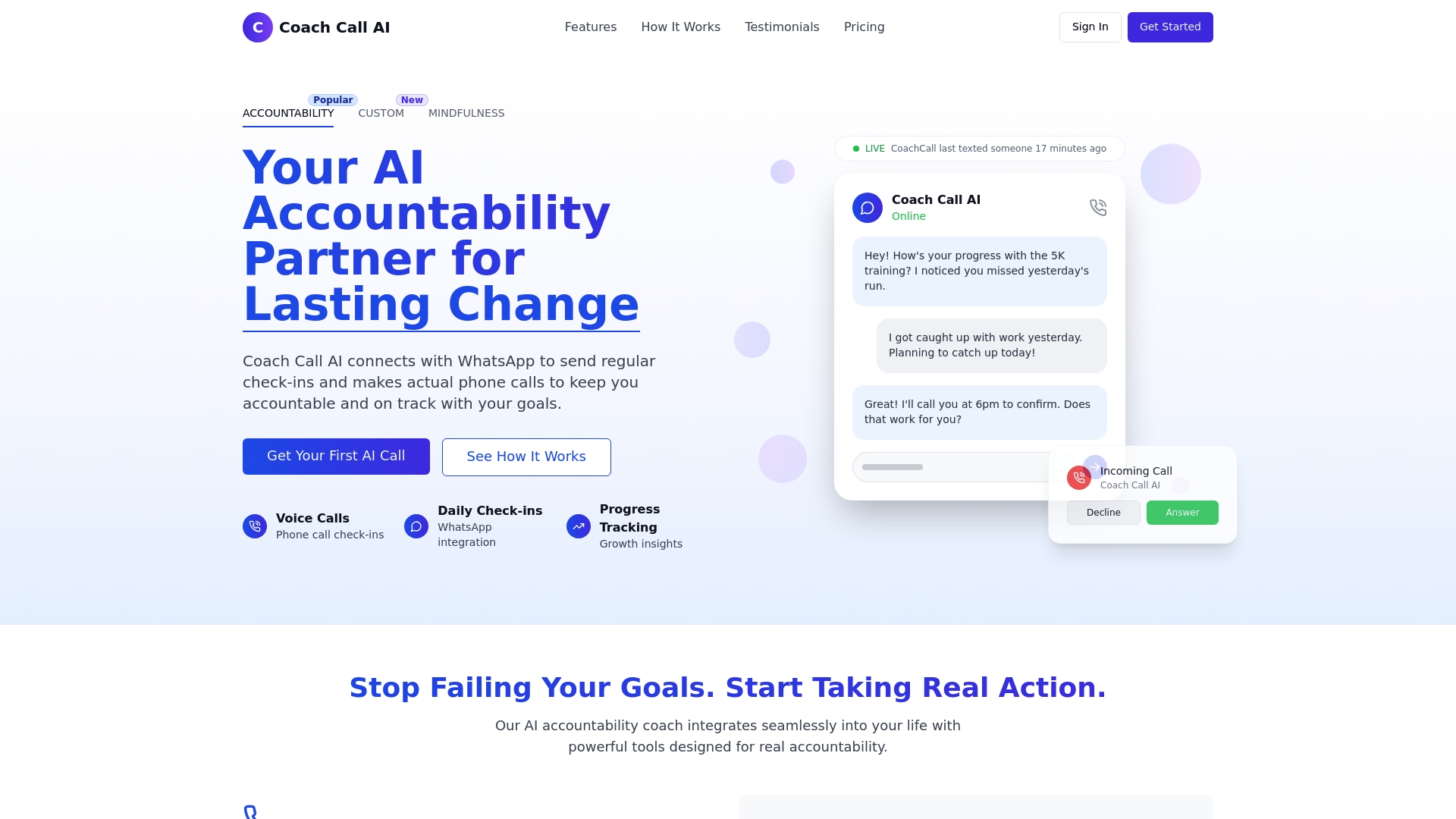
Unlike generic habit trackers, Coach Call AI uses behavioral science to create customized coaching experiences. The system learns your patterns, celebrates your progress, and adjusts its approach based on what motivates you most. You get the structure and accountability of professional coaching with the flexibility and accessibility of an AI partner available 24/7. Whether you're building exercise habits, improving work productivity, or developing mindfulness practices, Coach Call AI applies behavioral coaching fundamentals to help you achieve measurable, lasting change.
Frequently asked questions about behavioral coaching
What behaviors are typically targeted by behavioral coaching?
Behavioral coaching commonly addresses exercise frequency, work task completion, communication patterns, time management actions, and daily routine habits. Coaches focus on observable, measurable behaviors directly linked to client goals rather than abstract qualities. The key is specificity: "exercise 30 minutes four times weekly" rather than "get healthier."
How can digital behavioral coaching apps improve my habits?
Digital apps deliver consistent accountability through automated check-ins, immediate reinforcement via progress tracking, and personalized nudges timed to your behavior patterns. They remove the scheduling friction of human coaching while maintaining the core behavioral principles that drive change. Apps excel at tracking data and providing feedback that would be tedious for humans to manage manually.
What is the difference between behavioral and mental-state coaching?
Behavioral coaching targets specific actions you can observe and measure, while mental-state coaching addresses thoughts, beliefs, emotions, and cognitive patterns. Behavioral approaches ask "what will you do differently" while mental-state methods explore "how do you think about this." Many effective coaching programs combine both, using behavioral techniques for habit formation and mental-state work for underlying psychological barriers.
How do coaches measure progress in behavioral coaching?
Coaches track behavior frequency, duration, quality ratings, and goal completion percentages using logs, apps, or direct observation. Progress appears in quantifiable metrics like workouts completed, tasks finished on time, or instances of target behaviors performed. This objective measurement distinguishes behavioral coaching from approaches relying on subjective self-assessment. Regular data review allows coaches and clients to celebrate wins and adjust strategies based on actual performance.
Are there privacy concerns with AI-based behavioral coaching?
Yes, AI coaching platforms collect detailed behavior data that could be misused if not properly protected. Users should verify that platforms encrypt data, limit third-party sharing, and provide clear deletion options. Ethical AI coaching tools prioritize transparency about data practices and give users control over their information. Review privacy policies carefully before sharing personal behavior patterns with any digital coaching system.