
Fitting self-improvement into packed schedules feels impossible when your to-do list stretches endlessly. You want to grow, stay accountable, and boost well-being, but time slips away before you can even start. The good news is that structured routines designed for busy lifestyles can transform your productivity and mental health without demanding hours each day. This article delivers a practical framework and actionable routines that fit seamlessly into your existing schedule, helping you build habits that stick and deliver real results.
Table of Contents
- Key takeaways
- Criteria to choose self-improvement routines for busy lifestyles
- Top self-improvement routines to boost productivity and well-being
- How to tailor routines for diverse needs and avoid pitfalls
- Comparison of popular self-improvement routine frameworks for busy people
- Discover AI-powered accountability to boost your routines
- What are self-improvement routines?
Key Takeaways
| Point | Details |
|---|---|
| Keystone habits and intentions | Keystone habits anchor daily routines by linking new actions to specific cues, creating automatic behavior over time. |
| Micro habits start small | Micro habits lasting one to five minutes lower the barrier to starting and accumulate meaningful progress over weeks. |
| Accountability boosts adherence | External accountability dramatically increases the likelihood of follow through by providing regular prompts and social reinforcement. |
| Balanced routines prevent burnout | A balanced approach aligns routines with core values and personal relationships to prevent burnout and sustain long term engagement. |
Criteria to choose self-improvement routines for busy lifestyles
Selecting the right routine starts with understanding what makes habits stick when time is scarce. The most effective approach focuses on small keystone habits and implementation intentions that create ripple effects across your life. A keystone habit might be making your bed each morning, which triggers a cascade of organized behaviors throughout your day. Implementation intentions work by linking new behaviors to specific triggers using if-then statements: if I finish my morning coffee, then I will write three gratitude items.
Micro-habits lasting one to five minutes remove the psychological barrier of starting. When you commit to just two minutes of stretching or one paragraph of reading, you bypass the resistance that kills bigger commitments. These tiny actions accumulate into substantial progress over weeks and months. Anchoring new habits to existing routines creates automatic triggers. Stack your new behavior onto something you already do consistently, like checking your phone or brushing your teeth.
External accountability dramatically increases your success rate. Research shows that self-improvement strategies combining structure with accountability help busy people maintain momentum when willpower alone fails. Whether through a friend, app, or digital partner, having someone or something check in on your progress transforms intention into action.
Pro Tip: Start with just one to three habits per day to avoid overwhelming your schedule and mental bandwidth.
Consider these essential criteria when building your routine:
- Time investment required for each habit
- Flexibility to adapt when unexpected events disrupt your day
- Alignment with your core values and long-term goals
- Measurability so you can track progress objectively
- Enjoyment factor to sustain motivation beyond initial enthusiasm
The best routines feel natural rather than forced. If a habit creates constant friction or stress, it is not sustainable for your lifestyle. Busy people need self-care ideas that integrate smoothly rather than adding another burden to an already packed schedule.
Top self-improvement routines to boost productivity and well-being
Effective routines target multiple dimensions of your life without demanding excessive time. Morning foundations set the tone for your entire day. Start with a five-minute planning session where you identify your top three priorities. Add light movement like stretching or a brief walk to activate your body and mind. Hydrate immediately upon waking to jumpstart your metabolism and mental clarity.
Physical health routines form the backbone of sustained energy. Regular exercise does not require hour-long gym sessions. Three 20-minute movement breaks throughout your day deliver significant benefits. Focus on nutritious meals by meal prepping on weekends, which saves decision fatigue during busy weekdays. Prioritize sleep by maintaining consistent bedtimes, as combined exercise and psychological interventions yield the largest well-being gains when paired with quality rest.
Mental development practices sharpen your thinking and expand your capabilities. Dedicate 15 minutes to learning something new each day, whether through podcasts during your commute or articles during lunch. Meditation or mindfulness exercises lasting five to ten minutes reduce stress and improve focus. These practices compound over time, building cognitive resilience that helps you handle complex challenges.
Emotional routines create psychological stability. Daily reflection through journaling helps you process experiences and identify patterns in your reactions. Gratitude practice shifts your mindset toward abundance rather than scarcity. Spending just three minutes writing what went well each day rewires your brain to notice positive elements even during difficult periods.
Productivity routines maximize your limited time. Identify your most important tasks each morning and tackle them during your peak energy hours. Use deep work blocks of 90 minutes where you eliminate all distractions and focus on a single complex task. Limit digital interruptions by batching email checks to specific times rather than responding reactively throughout the day. These daily success routines prevent busy work from crowding out meaningful progress.
Evening routines close your day with intention. Acknowledge three wins from your day, no matter how small. Prepare for tomorrow by laying out clothes, packing your bag, and reviewing your calendar. This preparation reduces morning stress and creates momentum before you even wake up.
Follow these steps to create your personalized routine:
- Audit your current schedule to identify existing anchor points
- Select one habit from each category that aligns with your goals
- Start with micro-versions of each habit to build consistency
- Track your adherence for 30 days without judgment
- Gradually increase duration or complexity as habits become automatic
- Review and adjust based on what actually works in your real life
The master self-improvement process emphasizes starting small and scaling gradually rather than attempting dramatic overnight transformations. Your routine should evolve as your life circumstances change. When you boost accountability with AI or human partners, you create external pressure that helps you follow through even when motivation dips.

How to tailor routines for diverse needs and avoid pitfalls
One-size-fits-all routines fail because people have vastly different cognitive styles, energy levels, and life constraints. Neurodivergent individuals often benefit from highly structured routines with visual reminders and external accountability systems. Those with chronic illness need flexible frameworks that accommodate fluctuating energy and symptom management. The research shows that habit-based metacognitive interventions improve quality of life, particularly when routines include ongoing maintenance strategies rather than rigid protocols.
Hybrid workers face unique challenges balancing home and office environments. Time-spatial crafting helps by designating specific locations for specific activities, creating mental boundaries that preserve focus and energy. Remote work days might emphasize deep work blocks, while office days prioritize collaborative tasks and relationship building. Protecting transition time between contexts prevents the exhaustion that comes from constant context switching.
Older adults gain substantial benefits from routines that emphasize adaptability over intensity. Self-efficacy fluctuates daily and varies by task, so building habits that accommodate these variations prevents discouragement. Metacognitive approaches that help you recognize and respond to your changing capacity create sustainable improvement rather than rigid expectations that lead to failure.
Over-optimization creates its own problems. The relentless pursuit of productivity and self-improvement can trigger burnout and mental exhaustion. When every moment becomes an opportunity for optimization, you lose the restorative power of unstructured time and genuine human connection.
The self-help industrial complex often promotes a grindset culture that prioritizes individual achievement over relationships and community. Real well-being comes from balance, not from optimizing every waking moment. The most fulfilled people invest in deep connections and allow space for spontaneity and rest.
Compare different approaches to routine maintenance:
| Approach | Best for | Potential risk | Mitigation strategy |
|---|---|---|---|
| Rigid daily schedule | High structure needs | Burnout from inflexibility | Build in buffer time and rest days |
| Flexible habit stacking | Variable schedules | Inconsistent follow-through | Use accountability check-ins |
| Energy-based planning | Chronic conditions | Guilt during low-energy periods | Track patterns without judgment |
| Seasonal routines | Natural rhythm followers | Difficulty with transitions | Gradual shifts between seasons |
Pro Tip: Review your routines monthly to assess what is working and what is creating unnecessary stress, adjusting based on your actual self-efficacy patterns rather than idealized expectations.
When you achieve personal goals with AI accountability, you gain objective feedback about your patterns without the emotional complications of human judgment. This data helps you identify when your routine needs adjustment before you hit a breaking point. The self-help trap often involves chasing the next productivity hack rather than implementing and refining what already works for your unique situation.
Comparison of popular self-improvement routine frameworks for busy people
Different frameworks suit different personalities and schedules. Understanding the trade-offs helps you select an approach that matches your lifestyle rather than forcing yourself into an incompatible system. Keystone habits focus on identifying one or two powerful behaviors that trigger cascading improvements across multiple life areas. This approach requires minimal time investment and offers maximum flexibility, making it ideal for extremely busy individuals. The main limitation is that progress feels slow initially because you are not addressing every area simultaneously.
Ritual routines emphasize creating meaningful sequences of behaviors that become almost ceremonial. Morning and evening rituals bookend your day with intention and consistency. These work well for people who thrive on structure and find comfort in predictable patterns. The downside is reduced adaptability when travel or unexpected events disrupt your normal environment. Building elaborate rituals also increases complexity, which can create friction during stressful periods.
Time-blocking systems allocate specific hours to specific activities, creating a highly structured day. This framework excels at protecting deep work time and ensuring important activities do not get crowded out by urgent but less important tasks. Time-blocking demands significant upfront planning and works best for people with relatively predictable schedules. The rigidity can feel suffocating for those whose work involves frequent interruptions or unpredictable demands.
Accountability partnerships rely on external support to maintain consistency. Whether through a friend, coach, or digital system, regular check-ins create social pressure that boosts adherence. Research confirms that external accountability significantly increases habit adherence and that micro-habits support integration into busy schedules. The challenge lies in finding reliable partners whose schedules align with yours and who maintain their own commitment over time.
| Framework | Time investment | Flexibility | Complexity | External support | Best for |
|---|---|---|---|---|---|
| Keystone habits | Very low (5-15 min/day) | Very high | Low | Optional | Beginners, extremely busy people |
| Ritual routines | Moderate (20-40 min/day) | Moderate | Moderate | Optional | Structure lovers, stable schedules |
| Time-blocking | High (1-2 hours planning/week) | Low | High | Optional | Predictable schedules, project-based work |
| Accountability partnerships | Low (10-20 min/day) | High | Low | Required | Motivation challenges, social learners |
Consider these factors when selecting your framework:
- Your natural tendency toward structure versus spontaneity
- How much your daily schedule varies week to week
- Whether you prefer solo practices or social interaction
- Your past experiences with different organizational systems
- The specific life areas you want to improve most urgently
Many successful people combine elements from multiple frameworks rather than adhering strictly to one approach. You might use keystone habits as your foundation, add time-blocking for your most important work hours, and layer in accountability check-ins to maintain momentum. The key is starting simple and adding complexity only when the basics become automatic.
When you track personal development milestones, you gather data about which framework elements actually move the needle in your life versus which ones just feel productive. This evidence-based approach prevents you from wasting energy on strategies that look good on paper but do not deliver results in your specific context. The most evidence-based self-care ideas emphasize sustainability over intensity, recognizing that consistency beats perfection every time.
Discover AI-powered accountability to boost your routines
Building routines is one challenge. Maintaining them when life gets chaotic is another entirely. AI accountability partners provide consistent support without the scheduling complications of human coaches. Coach Call AI integrates directly with WhatsApp to deliver personalized check-ins, motivational messages, and scheduled voice calls that keep you on track with your self-improvement goals. The system adapts to your patterns, celebrating wins and offering support during setbacks.
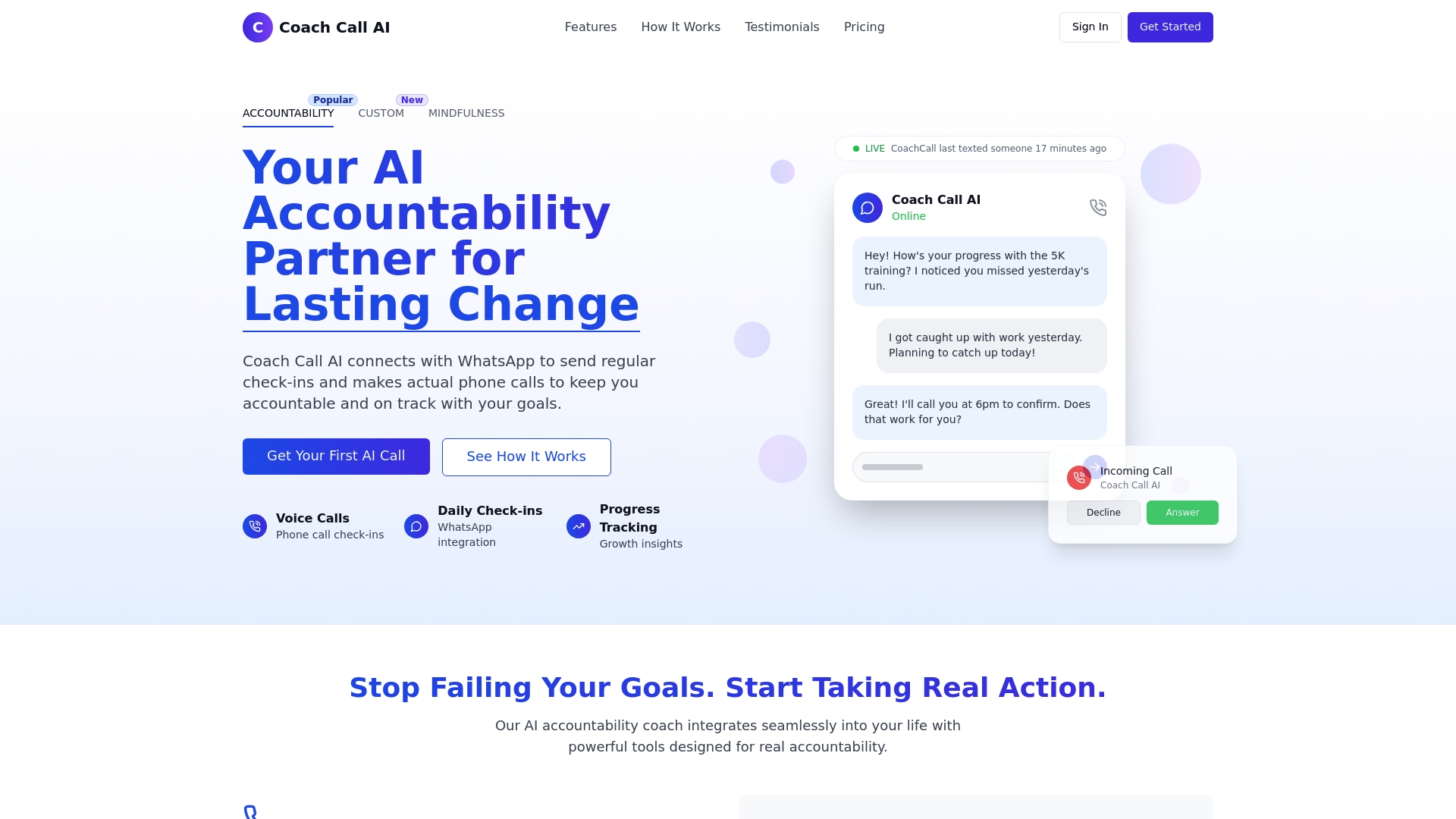
Busy professionals, students, and anyone juggling multiple responsibilities benefit from having an always-available partner who tracks progress and provides timely reminders. Unlike apps that passively log data, Coach Call AI actively engages with you through natural conversations that feel supportive rather than robotic. The platform helps you implement self-improvement strategies with AI that actually fit into your real life, not an idealized version of your schedule. When you master the self-improvement process with intelligent accountability, you transform intentions into consistent action that compounds over time.
What are self-improvement routines?
What exactly are self-improvement routines and why do they matter?
Self-improvement routines are structured sequences of habits and practices designed to enhance specific life areas like productivity, health, or emotional well-being. They matter because consistent small actions compound into significant long-term changes, and structured routines remove the need for constant willpower by making positive behaviors automatic.
How do I start building a routine when I have almost no free time?
Start with one micro-habit taking five minutes or less, anchored to something you already do daily. Use implementation intentions by creating an if-then plan, and consider adding self-improvement strategies with AI accountability to maintain consistency without adding planning time.
How can I adapt routines when my schedule changes constantly?
Focus on keystone habits that deliver maximum impact with minimal time investment, and build flexibility into your system by having shortened versions of each practice. Energy-based planning that matches activities to your current capacity works better than rigid time-based schedules for variable lifestyles.
What are the risks of over-optimizing my self-improvement routine?
Over-optimization leads to burnout, mental exhaustion, and neglect of relationships that actually drive life satisfaction. When every moment becomes a productivity opportunity, you lose the restorative benefits of unstructured time and spontaneous human connection that are essential for well-being.
How do I maintain motivation when progress feels slow?
Track small wins daily rather than focusing only on distant goals, and use external accountability through partners or tools to maintain consistency when motivation naturally dips. Remember that self-efficacy fluctuates daily, so build routines that accommodate lower-energy periods without requiring perfection.