
Staying consistent with personal development goals is tough. You set ambitious targets for wellness, productivity, or fitness, but life gets busy and accountability slips away. Traditional tracking methods like journals or basic apps often lack the personalized feedback and consistent check-ins needed to maintain momentum. This is where AI-driven accountability tools shine. They offer real-time support, automated reminders, and intelligent coaching that adapts to your progress. In this article, you'll discover criteria for selecting effective milestones, explore top milestone types across wellness, productivity, and fitness, compare tracking options from manual to AI-driven, and learn how to leverage AI tools to achieve your personal development goals in 2026.
Table of Contents
- Criteria For Selecting And Tracking Personal Development Milestones
- Top Personal Development Milestones In Wellness, Productivity, And Fitness
- Comparing Tracking Options: Manual, Digital Apps, And AI-Driven Accountability
- Making The Most Of AI Tools To Track And Achieve Your Personal Development Milestones
- Boost Your Personal Development With Coach Call AI
- Frequently Asked Questions About Personal Development Milestones
Key takeaways
| Point | Details |
|---|---|
| Milestone criteria matter | Relevance, measurability, and clear feedback loops ensure milestones drive meaningful progress. |
| Personalized milestones work best | Wellness, productivity, and fitness milestones should align with your unique goals and lifestyle. |
| AI tools boost adherence | AI accountability partners provide consistent support, increasing goal achievement rates significantly. |
| Tracking methods vary widely | Manual, digital, and AI-driven options each offer distinct advantages and trade-offs. |
| Choose based on your needs | Select tracking methods that match your commitment level and desired support intensity. |
Criteria for selecting and tracking personal development milestones
Choosing the right milestones is the foundation of effective personal development. Without clear criteria, you risk setting vague goals that lack direction and fail to inspire action. Start by ensuring your milestones are relevant to your broader life vision. A milestone that doesn't connect to your core values or long-term aspirations won't motivate you when challenges arise.
Clarity and measurability are non-negotiable. Vague goals like "get healthier" offer no way to track progress or celebrate wins. Instead, define specific outcomes such as "meditate 10 minutes daily for 30 days" or "complete three focused work blocks per day." Measurable milestones let you see exactly where you stand and adjust your approach as needed.
Feedback loops are critical for course correction. Effective milestone tracking involves relevance, clarity, measurability, and actionable feedback that helps you refine your strategy. Without regular check-ins, you might continue ineffective habits for weeks before realizing you're off track. AI-driven tools excel here by providing real-time insights and adaptive suggestions based on your patterns.
Accountability significantly improves adherence to milestones. When you know someone or something is checking in on your progress, you're more likely to follow through. This external reinforcement creates a commitment device that keeps you honest and motivated even on difficult days.
Pro Tip: Use the SMART framework when setting milestones. Make them Specific, Measurable, Achievable, Relevant, and Time-bound to maximize clarity and motivation.
Key criteria for effective milestones:
- Relevance to your core values and long-term vision
- Clear definition with measurable outcomes
- Built-in feedback mechanisms for adjustment
- Accountability structures to maintain consistency
- Realistic timeframes that challenge without overwhelming
"AI accountability tools transform vague intentions into concrete action plans, boosting both commitment and clarity for individuals pursuing personal development milestones."
When you apply these criteria, you create a solid foundation for sustainable growth. Your milestones become more than abstract wishes. They transform into actionable targets that guide daily decisions and build momentum over time.
Top personal development milestones in wellness, productivity, and fitness
Personal development spans multiple domains, and each requires tailored milestones that address specific challenges and opportunities. Understanding the most impactful milestones in wellness, productivity, and fitness helps you design a balanced growth strategy that addresses your whole life.
Wellness milestones focus on mental and emotional health, creating stability that supports all other areas of development. Daily meditation practice, even just 5 to 10 minutes, builds mindfulness and stress resilience. Sleep quality improvement milestones might include maintaining a consistent bedtime for 21 days or achieving seven hours of sleep nightly. Hydration targets, such as drinking eight glasses of water daily, support physical health and cognitive function. These wellness milestones create a foundation of energy and mental clarity that enhances productivity and fitness efforts.
Productivity milestones help you accomplish more with less stress by improving focus and time management. Completing a prioritized task list daily ensures you tackle high-impact work consistently. Maintaining focus blocks, such as three 90-minute deep work sessions per day, protects your attention from constant interruptions. Efficient meeting management milestones might include reducing meeting time by 25% or ensuring every meeting has a clear agenda and outcome. Tracking milestones across wellness, productivity, and fitness can be effectively enhanced with AI coaching that adapts to your evolving needs and patterns.

Fitness milestones provide tangible evidence of physical progress and build confidence through incremental achievements. Strength goals like adding 10 pounds to your squat or performing 10 consecutive push-ups create clear targets. Endurance improvements, such as running an additional mile or cycling 30 minutes without stopping, demonstrate cardiovascular gains. Consistent workout frequency milestones, like exercising four times per week for eight weeks, establish sustainable habits that compound over time.
Top milestone examples by category:
- Wellness: Daily 10-minute meditation, 7 hours sleep nightly, 64 ounces water daily, weekly journaling sessions, monthly stress assessments
- Productivity: Three deep work blocks daily, inbox zero twice weekly, single-tasking for priority projects, weekly planning sessions, quarterly goal reviews
- Fitness: Four workouts weekly, 10,000 steps daily, 5% body composition improvement, specific strength benchmarks, monthly endurance tests
The key to effective milestone selection is personalization. Your wellness needs differ from someone else's, and your productivity challenges are unique to your work style and environment. Choose milestones that address your specific obstacles and align with your definition of success. When milestones feel personally meaningful, you're far more likely to stay committed through inevitable setbacks.
Balancing milestones across all three domains prevents burnout and creates sustainable growth. Focusing exclusively on fitness while neglecting wellness and productivity leads to imbalance and eventual regression. A holistic approach ensures progress in one area supports and reinforces gains in others, creating a virtuous cycle of continuous improvement.
Comparing tracking options: manual, digital apps, and AI-driven accountability
Once you've selected your milestones, choosing the right tracking method determines whether you'll maintain consistency or lose momentum. Each approach offers distinct advantages and limitations that suit different personalities, lifestyles, and commitment levels.
Manual tracking using journals or spreadsheets gives you complete control and flexibility. You can customize formats, add qualitative reflections, and avoid digital distractions. Many people find the physical act of writing reinforces commitment and creates a tangible record of progress. However, manual tracking requires significant discipline and offers no automated reminders or data analysis. It's easy to forget entries, lose notebooks, or abandon the practice when life gets hectic.
Standard digital apps provide structure through features like goal setting, progress charts, and reminder notifications. They automate data collection and visualization, making it easier to spot trends and patterns. Popular apps offer social features, habit streaks, and gamification elements that boost motivation. The downside is that most apps lack personalized feedback and adaptive coaching. They remind you to log data but don't offer intelligent insights about why you're struggling or how to adjust your approach.
AI-driven accountability tools represent the cutting edge of milestone tracking. These platforms combine automation with personalized coaching, delivering timely encouragement and strategic guidance based on your unique patterns. AI voice coaching boosts goal adherence by 30% for busy professionals by providing consistent support without the scheduling challenges of human coaches. AI tools analyze your progress data, predict potential obstacles, and suggest adjustments before you fall off track. They offer seamless accountability through voice calls, messaging, and intelligent check-ins that feel like conversations with a supportive partner.
| Tracking Method | Usability | Effectiveness | Cost | Personalized Support |
|---|---|---|---|---|
| Manual (journals, spreadsheets) | Requires high discipline | Moderate, depends on consistency | Very low (paper, pen) | None, fully self-directed |
| Digital Apps | Easy to use, some setup needed | Good with reminders and visualization | Low to moderate (free or subscription) | Minimal, mostly automated prompts |
| AI-Driven Tools | Very easy, conversational interface | High, adaptive feedback and coaching | Moderate (subscription-based) | Extensive, personalized and predictive |
Key pros and cons of each tracking method:
- Manual tracking: Complete customization and no tech dependence, but requires strong self-discipline and offers no automated support or data insights
- Digital apps: Convenient reminders and progress visualization, but lack personalized coaching and can become just another ignored notification
- AI-driven tools: Intelligent feedback and consistent accountability, but require subscription investment and comfort with AI interactions
Pro Tip: Consider a hybrid approach that combines digital tracking for data collection with AI coaching for personalized feedback and accountability. This maximizes both convenience and motivational support.
The best tracking method depends on your personality, resources, and commitment level. If you're highly self-motivated and prefer analog simplicity, manual tracking might work. If you want convenience and basic automation, digital apps provide solid support. But if you struggle with consistency and need intelligent, adaptive accountability, AI-driven tools offer the most comprehensive solution for sustained progress in 2026.
Making the most of AI tools to track and achieve your personal development milestones
AI accountability partners transform milestone tracking from a solitary struggle into a supported journey. These tools leverage artificial intelligence to provide the consistent, personalized coaching that human accountability partners can't always deliver due to scheduling conflicts and availability constraints.
Key features of AI accountability partners include scheduled voice calls that check in on your progress at optimal times, motivational prompts tailored to your specific goals and challenges, and personalized check-ins that adapt based on your response patterns. Unlike static apps, AI tools learn from your behavior and adjust their approach to maximize effectiveness. They celebrate your wins, gently redirect when you slip, and offer strategic suggestions when you're stuck.
Using AI accountability partners increases consistency and milestone achievement rates by removing common barriers to progress. You don't need to coordinate schedules, worry about judgment, or pay premium rates for human coaching. The AI is always available, endlessly patient, and focused entirely on your success.
Steps to integrate AI coaching effectively into your daily routine:
- Define your top three milestones across wellness, productivity, or fitness with specific metrics and timeframes.
- Set up your AI accountability partner with your goals, preferred check-in times, and communication style preferences.
- Respond honestly to check-ins, providing accurate progress data and sharing challenges you're facing.
- Review AI-generated insights weekly to identify patterns and adjust your approach based on recommendations.
- Celebrate milestones with your AI partner to reinforce positive behavior and build momentum for the next goal.
Maximizing AI tool benefits requires active engagement and honest communication. The more data you provide, the better the AI understands your patterns and delivers relevant support. Treat your AI accountability partner as a genuine collaborator in your personal development journey, not just another app to ignore.
Tips for getting the most from AI accountability tools:
- Engage consistently with check-ins rather than skipping or dismissing them when busy
- Provide honest feedback about challenges instead of only reporting successes
- Refine goals based on AI insights and recommendations to stay aligned with your evolving priorities
- Use voice features when available for more natural, engaging interactions
- Review progress dashboards regularly to spot trends and celebrate improvements
Pro Tip: Set incremental check-in milestones with your AI support system, such as weekly progress reviews and monthly goal refinements, to maintain sustained growth and prevent stagnation.
AI tools shine brightest when you use them proactively rather than reactively. Don't wait until you've fallen off track to engage with your AI partner. Regular interaction builds a relationship that feels supportive and motivating, making it easier to maintain consistency even during challenging periods. The combination of intelligent automation and personalized coaching creates a powerful support system that adapts to your unique needs and keeps you moving toward your goals.
Boost your personal development with Coach Call AI
Ready to transform your milestone tracking from inconsistent effort into sustained achievement? Coach Call AI serves as your dedicated AI accountability partner, available 24/7 via phone calls and WhatsApp to keep you on track. Unlike traditional apps that send passive reminders, Coach Call AI delivers tailored check-ins, motivational coaching, and intelligent feedback that adapts to your progress patterns. Whether you're pursuing wellness improvements, productivity gains, or fitness milestones, this platform provides the consistent support you need to stay committed.
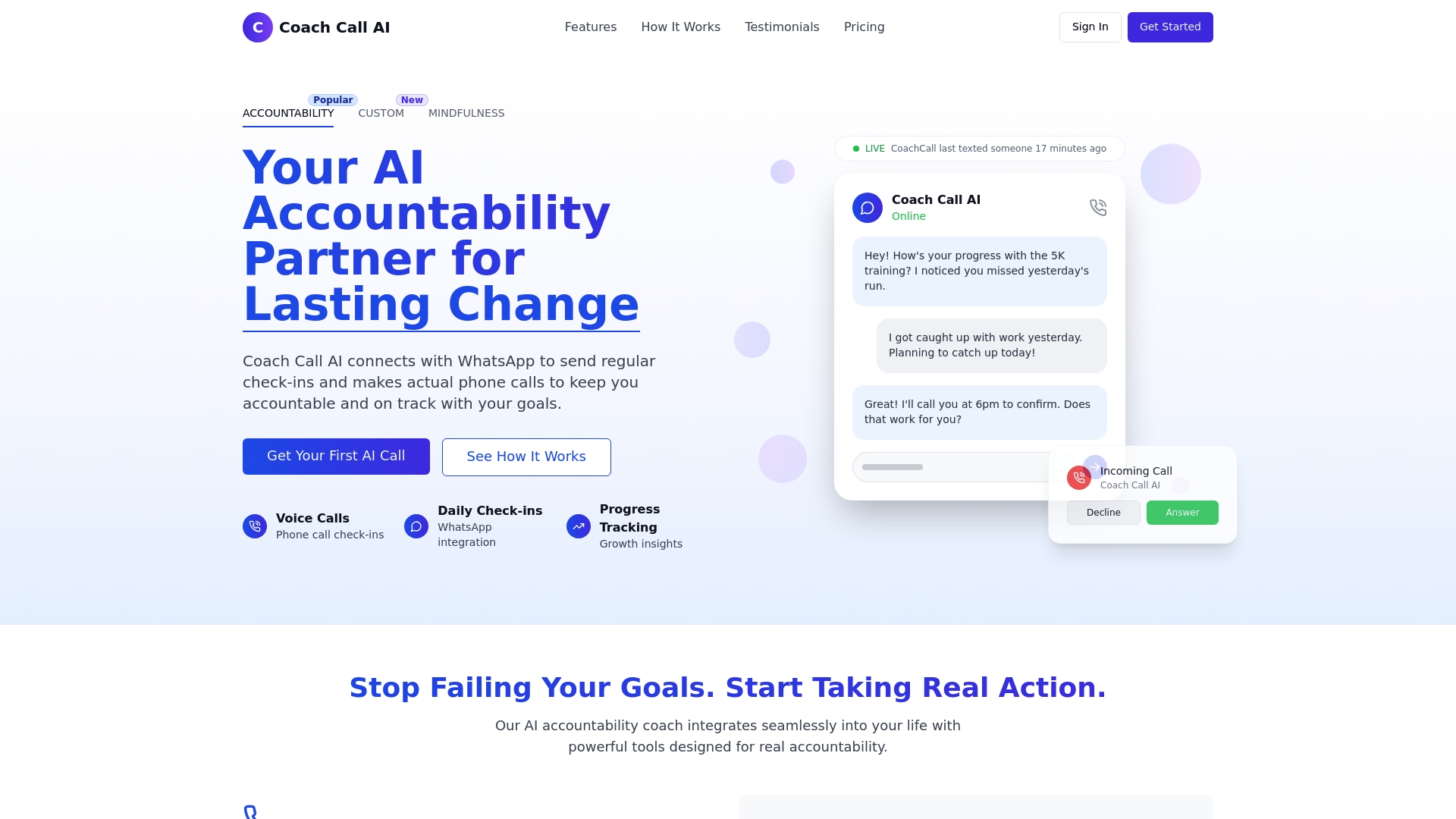
Coach Call AI eliminates the scheduling hassles and high costs of human coaches while providing personalized guidance that generic apps can't match. Set your goals, choose your check-in frequency, and let the AI handle the rest. You'll receive timely encouragement when you're doing well and strategic suggestions when you need course correction. Experience the difference that intelligent, consistent accountability makes in achieving your personal development milestones. Start your journey with Coach Call AI today and discover how AI-driven support accelerates your progress in 2026.
Frequently asked questions about personal development milestones
What are personal development milestones and why are they important?
Personal development milestones are specific, measurable achievements that mark progress toward broader life goals in areas like wellness, productivity, and fitness. They're important because they provide clear targets that keep you motivated, allow you to track tangible progress, and create a sense of accomplishment that fuels continued effort. Without milestones, personal development feels abstract and overwhelming, making it easy to lose direction and abandon your goals.
How can AI accountability improve milestone achievement?
AI accountability improves milestone achievement by providing consistent check-ins, personalized feedback, and adaptive coaching that human partners can't always deliver due to scheduling constraints. AI tools analyze your progress patterns, predict potential obstacles, and offer timely encouragement or strategic adjustments. Studies show AI-driven support can boost goal adherence by 30% compared to self-directed efforts, making it a powerful tool for sustained personal development in 2026.
What is the best way to choose milestones for fitness and wellness?
The best way to choose fitness and wellness milestones is to start with your current baseline and set incremental targets that challenge without overwhelming you. Focus on specific, measurable outcomes like "exercise four times weekly" or "meditate 10 minutes daily" rather than vague goals. Ensure your milestones align with your broader health vision and lifestyle constraints, and adjust them based on progress feedback to maintain motivation and prevent burnout.
Can manual and AI tracking methods be combined effectively?
Yes, manual and AI tracking methods combine effectively when you use manual journaling for qualitative reflections and emotional insights while leveraging AI tools for automated data collection, reminders, and personalized coaching. This hybrid approach maximizes the benefits of both methods, giving you the flexibility and depth of manual tracking alongside the consistency and intelligent feedback of AI-driven accountability. Many successful individuals use this combination to maintain comprehensive awareness of their personal development journey.
How often should I review and adjust my personal development milestones?
You should review your personal development milestones weekly to assess immediate progress and monthly to make strategic adjustments based on trends and changing priorities. Weekly reviews keep you accountable and allow quick course corrections, while monthly reviews provide perspective on longer-term patterns and help you refine goals as your circumstances evolve. AI accountability tools automate much of this review process, providing insights and recommendations that make adjustments easier and more data-driven.