
Many assume coaching delivers quick performance boosts or fixes immediate problems. Developmental coaching focuses on long-term growth, expanding your capacity for complexity, self-awareness, and adaptability rather than chasing short-term wins. This approach transforms how you think, lead, and navigate challenges like procrastination. Whether you're a busy professional seeking leadership skills, a student managing competing demands, or someone stuck in delay patterns, developmental coaching offers frameworks and techniques for sustained personal transformation. This guide explores what developmental coaching truly is, how proven models like Kegan's stages and Torbert's action logics shape growth, and why this method creates lasting change in your career and life.
Table of Contents
- What Is Developmental Coaching? Understanding The Core Concept
- Developmental Coaching Frameworks: How Kegan's And Torbert's Models Guide Growth
- Applications Of Developmental Coaching: Leadership Growth And Beating Procrastination
- Techniques And Best Practices In Developmental Coaching For Lasting Growth And Accountability
- Explore AI-Powered Coaching Solutions To Support Your Growth
- FAQ
Key takeaways
| Point | Details |
|---|---|
| Long-term transformation focus | Developmental coaching builds capabilities and perspective over time, not quick fixes. |
| Framework-driven growth | Uses Kegan's and Torbert's models to expand your meaning-making capacity systematically. |
| Leadership and procrastination applications | Proven effective for deepening leadership skills and achieving high remission rates in procrastination. |
| Accountability and reflection | Combines feedback, experiential learning, and goal revision to sustain progress. |
What is developmental coaching? Understanding the core concept
Developmental coaching centers on building your inner capacity for growth, learning, and adapting to complexity. Unlike performance coaching which targets short-term results, this approach invests in your long-term trajectory by expanding skills, knowledge, and how you make meaning of experiences. You're not just solving today's problem. You're reshaping how you approach problems entirely.
This distinction matters because performance coaching addresses immediate tasks: hit your sales quota, finish a project on time, improve a specific skill. Developmental coaching asks deeper questions: How do you interpret feedback? What assumptions limit your thinking? How can you lead with greater complexity and empathy? The goal is capability building that compounds over months and years, influencing your entire career path and personal life.
Key benefits include:
- Enhanced self-awareness and emotional intelligence
- Greater adaptability in uncertain or changing environments
- Improved decision-making through expanded perspective-taking
- Stronger leadership presence and interpersonal effectiveness
- Sustained motivation and resilience when facing setbacks
For busy professionals juggling competing priorities, developmental coaching offers a structured way to grow without adding surface-level tactics. Students benefit by building learning strategies and mental frameworks that outlast any single course. Those struggling with procrastination discover how to shift underlying patterns rather than applying temporary willpower fixes.
Pro Tip: Identifying your current growth stage helps you and your coach tailor goals to your readiness for complexity. A beginner leader needs different developmental work than a seasoned executive.
By focusing on personalized coaching support aligned with your developmental stage, you create a foundation for continuous improvement. This isn't about checking boxes. It's about evolving how you think, relate, and act in the world.
Developmental coaching frameworks: How Kegan's and Torbert's models guide growth
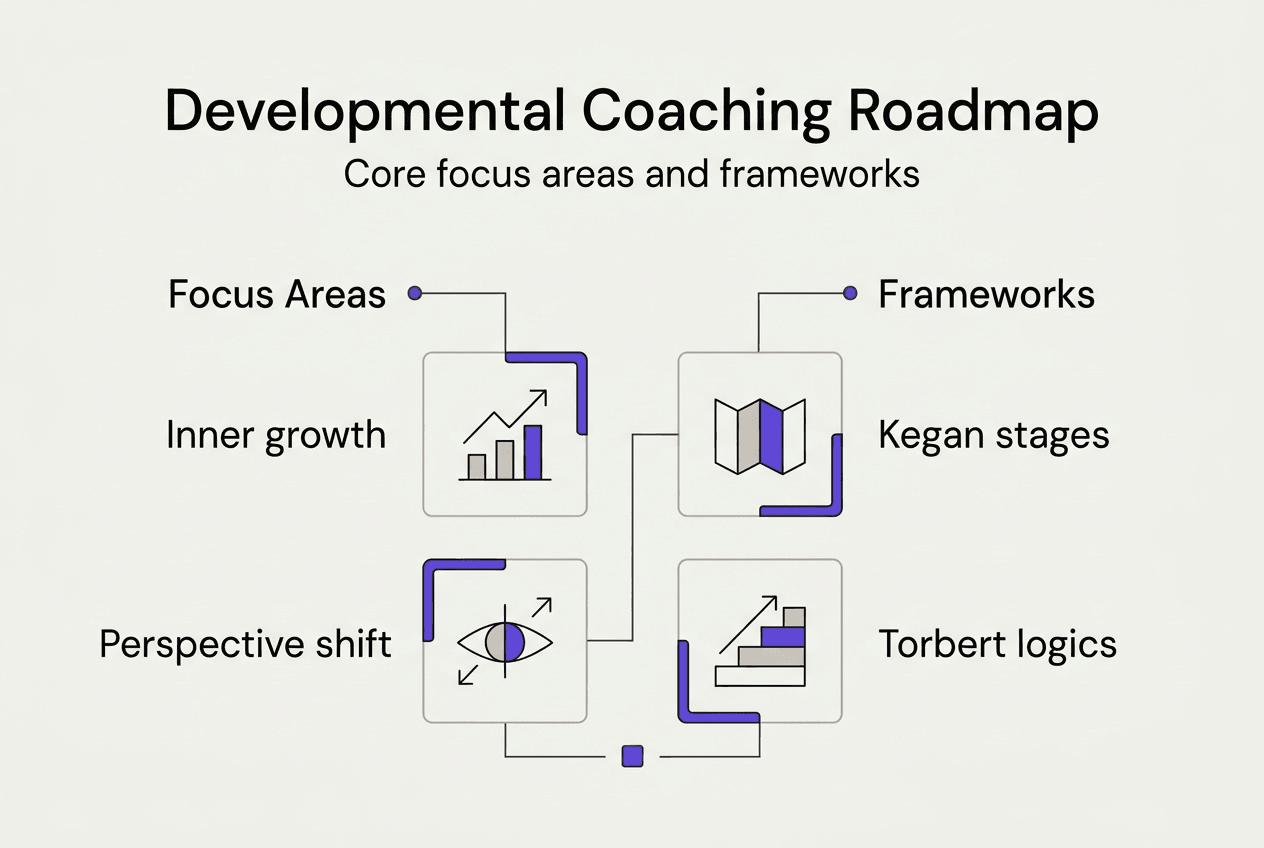
Developmental coaching relies on robust adult development theories to map and facilitate growth. Two foundational frameworks dominate this space: Robert Kegan's stages of adult development and Bill Torbert's action logics. Both models describe how individuals expand their capacity for complexity and perspective-taking over time, moving from simpler to more sophisticated ways of making meaning.
Kegan's model outlines five stages, each representing a qualitative shift in how you understand yourself and the world. Early stages involve dependence on external validation and concrete rules. Later stages embrace interdependence, self-authorship, and the ability to hold multiple perspectives simultaneously. Coaches use these stages to assess where you are and design interventions that stretch you toward the next level without overwhelming you.

Torbert's action logics framework parallels Kegan's work, describing seven developmental stages from Opportunist to Alchemist. Each action logic reflects a distinct way of interpreting situations, making decisions, and interacting with others. Leaders operating at higher action logics demonstrate greater strategic thinking, collaboration, and capacity to navigate ambiguity. Developmental coaching helps you recognize your current action logic and experiment with behaviors that signal readiness for the next stage.
| Framework | Focus | Key Stages | | --- | --- | | Kegan's Stages | Meaning-making and self-awareness evolution | Socialized Mind, Self-Authoring Mind, Self-Transforming Mind | | Torbert's Action Logics | Leadership effectiveness and decision-making complexity | Achiever, Redefiner, Transformer, Alchemist |
These frameworks matter because they provide a roadmap. Without them, coaching risks becoming generic advice or motivational pep talks. With them, you gain clarity on your developmental edge: the specific area where growth will unlock the most value. A coach trained in these models can spot when you're ready to question long-held assumptions or integrate competing values, accelerating your transformation.
Pro Tip: Ask your coach which framework they use and how they assess your current stage. Understanding the model helps you engage more actively in your own growth process.
For those exploring developmental coaching frameworks, these theories translate abstract growth into tangible milestones. You'll notice shifts in how you handle conflict, set priorities, or respond to feedback. Each shift signals vertical development: not just learning new skills, but transforming how you think about skills themselves.
Applications of developmental coaching: leadership growth and beating procrastination
Developmental coaching shines in two high-impact areas: leadership development and overcoming procrastination. Both applications demonstrate how this approach creates measurable, lasting change for busy professionals, students, and anyone seeking accountability.
In leadership contexts, developmental coaching deepens self-awareness and prepares individuals for future roles. Leaders learn to navigate organizational complexity, inspire diverse teams, and make decisions that balance competing stakeholder needs. This isn't about mastering a new management technique. It's about evolving your leadership identity and capacity to hold paradoxes without collapsing into binary thinking.
Leadership benefits include:
- Improved emotional regulation under pressure
- Enhanced ability to mentor and develop others
- Greater comfort with ambiguity and rapid change
- Stronger strategic thinking and systems awareness
- More authentic and values-aligned decision-making
Organizations investing in developmental leadership coaching see ripple effects: improved culture, higher innovation rates, and better retention of high-potential talent. Leaders who undergo this coaching report feeling more confident, purposeful, and effective in their roles.
Procrastination coaching represents another powerful application. A structured procrastination coaching program produced 68% full remission in participants, with large reductions in severity and increased life satisfaction. This isn't willpower training. It's addressing the developmental roots of delay: fear of judgment, perfectionism, unclear values, or lack of self-authorship.
"A brief, structured procrastination coaching program produced large reductions in severity and high remission rates: 68% full remission and significant life satisfaction gains."
For students juggling academic demands and personal growth, procrastination coaching helps build agency and time management rooted in intrinsic motivation. Busy professionals learn to align tasks with deeper goals, reducing avoidance behaviors. The coaching process uncovers why you delay, not just how to stop delaying, creating sustainable change.
These applications matter because they address real barriers to success. Leadership development prepares you for roles you haven't held yet. Procrastination coaching removes friction that sabotages your best intentions. Both leverage developmental principles to create transformation that sticks. Explore how student mental health coaching integrates these same principles for younger populations navigating academic and personal challenges.
Techniques and best practices in developmental coaching for lasting growth and accountability
Developmental coaching employs specific techniques to facilitate vertical growth and sustained accountability. Understanding these methods helps you maximize your coaching investment and actively participate in your transformation.
Core techniques include integrating feedback, experiential learning, and reflection. Developmental coaching utilizes techniques like integrating feedback and experiential learning to create moments where you confront and revise limiting assumptions. Feedback isn't just praise or criticism. It's data about how your behavior lands with others, revealing blind spots and growth edges. Experiential learning involves real-world experiments: trying new behaviors, observing results, and adjusting your approach based on what you discover.
Coaches also emphasize setting long-term learning objectives and providing resources for continued education. This isn't about cramming information. It's about cultivating curiosity and building learning habits that outlast the coaching relationship. You might read books that challenge your worldview, attend workshops on topics outside your comfort zone, or journal about experiences to deepen self-awareness.
To maximize your coaching benefit and maintain accountability, follow these steps:
- Clarify your developmental goals early, focusing on who you want to become, not just what you want to achieve.
- Commit to regular reflection practices between sessions, such as journaling or reviewing feedback from colleagues.
- Embrace discomfort as a signal of growth, especially when your coach challenges assumptions you've held for years.
- Apply new behaviors in low-stakes situations first, building confidence before tackling high-pressure scenarios.
- Track progress using developmental milestones, not just task completion, to see how your thinking and relating evolve.
- Revisit and adjust goals periodically with your coach, ensuring they remain aligned with your emerging capacities.
Pro Tip: Regularly review progress and adjust goals with your coach to stay aligned with your evolving growth edge. What felt challenging six months ago might now be second nature, signaling readiness for the next developmental leap.
Accountability in developmental coaching differs from performance accountability. You're not just reporting on tasks. You're reflecting on how you showed up, what you learned about yourself, and where you notice shifts in perspective. This requires honesty and vulnerability, but it also creates the conditions for genuine transformation. Learn more about effective coaching techniques that support sustained learning and growth over time.
By combining structured techniques with personalized support, developmental coaching creates a container for growth that respects your pace while challenging you to expand. The result is lasting change that influences every area of your life.
Explore AI-powered coaching solutions to support your growth
Developmental coaching principles are now accessible through AI-powered platforms designed for busy individuals seeking consistent accountability and growth support. If you're juggling work, study, or personal challenges like procrastination, AI coaching offers structured check-ins, motivational messaging, and voice interactions that mirror human coaching dynamics without scheduling constraints.
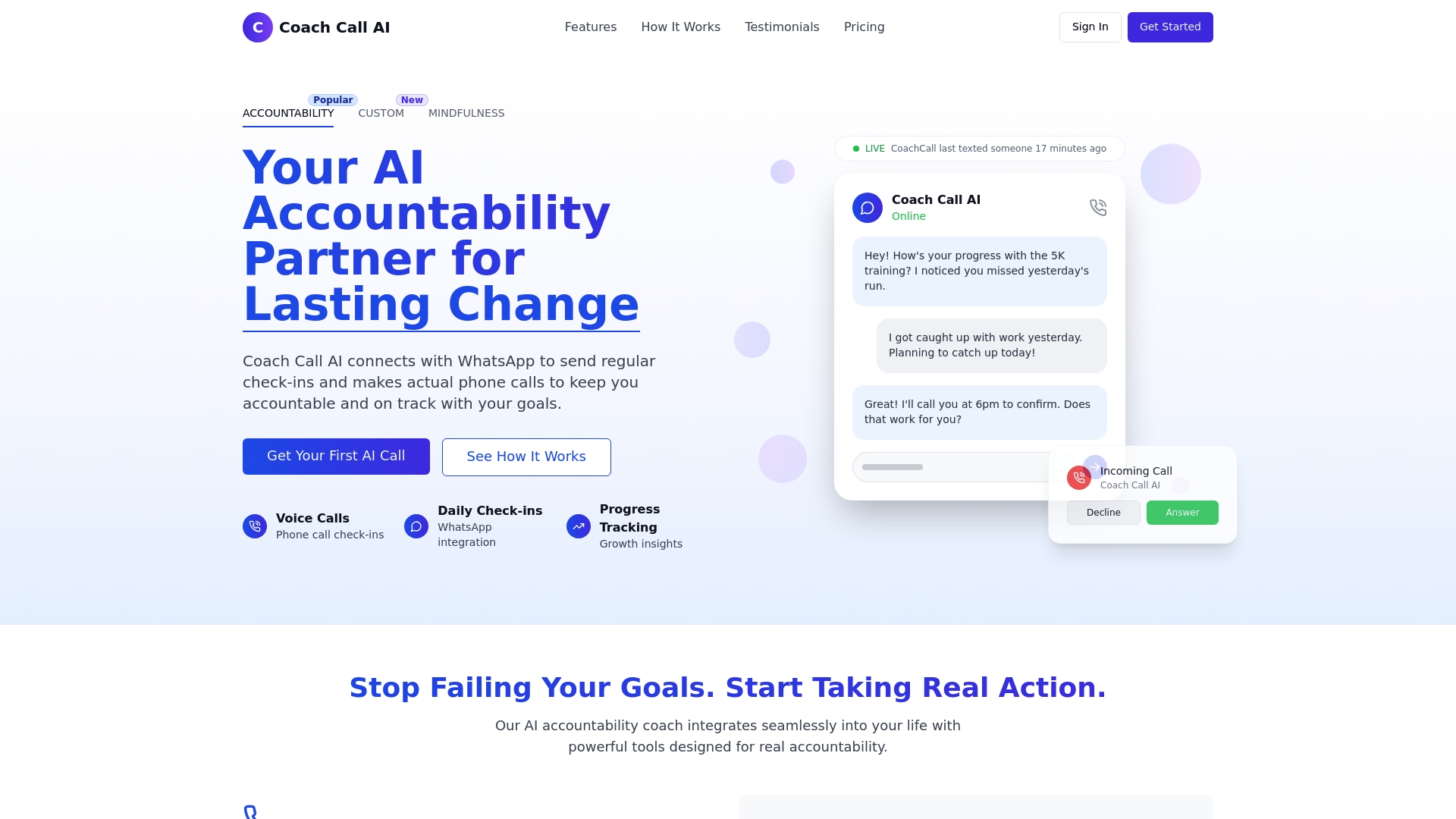
Platforms like Coach Call AI integrate with WhatsApp to provide regular accountability through scheduled calls and real-time messaging. You set goals aligned with your developmental stage, track progress, and receive tailored support that adapts to your evolving needs. This approach complements traditional coaching by offering continuous touchpoints between sessions, reinforcing new behaviors and perspectives.
AI coaching excels at maintaining momentum. It celebrates milestones, prompts reflection, and reminds you of commitments when life gets hectic. For students managing academic pressure or professionals navigating leadership transitions, this consistent presence helps sustain growth without adding complexity to your schedule. The technology respects your privacy while delivering personalized insights based on your progress data.
Consider exploring AI coaching as a supplement to or starting point for your developmental journey. It's not a replacement for deep human connection, but it offers accessibility, flexibility, and affordability that make growth support available when you need it most.
FAQ
What is developmental coaching most effective for?
Developmental coaching best supports long-term growth areas like leadership skills, overcoming procrastination, and building adaptability. It fosters deeper self-awareness and the capacity to navigate complexity, making it ideal for professionals preparing for bigger roles or individuals seeking sustained personal transformation. Unlike quick-fix approaches, it addresses underlying patterns and perspectives that shape behavior over time.
How does developmental coaching differ from other coaching types?
Developmental coaching targets inner growth and perspective changes rather than immediate skills or task completion. It focuses on expanding your capacity for complexity, self-authorship, and meaning-making through frameworks like Kegan's stages. Performance coaching, by contrast, aims for short-term results and specific skill improvements. The developmental approach creates lasting transformation by reshaping how you think, not just what you do.
Can developmental coaching help with procrastination?
Yes, developmental coaching significantly reduces procrastination severity and improves life satisfaction. A structured program achieved 68% full remission by addressing root causes like fear of judgment, perfectionism, and lack of self-authorship rather than applying willpower tactics. This approach helps you understand why you delay and builds intrinsic motivation aligned with your deeper values, creating sustainable change.
What should I expect during a developmental coaching session?
Sessions focus on reflective conversations, integrating feedback, and experiential exercises designed to stretch your thinking. You'll set and revise long-term growth goals with emphasis on deepening self-awareness and exploring assumptions that limit your effectiveness. Coaches may introduce developmental frameworks to help you understand your current stage and identify your growth edge. Expect discomfort as you challenge familiar patterns, but also clarity as you gain new perspectives on yourself and your potential.