
Virtual coaching can add over five months of learning progress to your year with just fifteen minutes daily. This form of personalized support harnesses AI and flexible modalities to deliver consistent accountability, motivation, and measurable results. By combining digital messaging, voice calls, and intelligent progress tracking, virtual coaching meets the needs of busy professionals and students seeking reliable, accessible support that fits into irregular schedules and delivers real growth.
Table of Contents
- The Rise of Virtual Coaching: Context And Industry Growth
- How Virtual Coaching Works: Modalities And Accessibility
- Why Virtual Coaching Works: Role Of AI And Automation In Accountability
- Psychological Mechanisms Behind Virtual Coaching Effectiveness
- Quantitative Benefits Of Virtual Coaching And Tutoring
- Common Misconceptions About Virtual Coaching
- Applying Virtual Coaching For Busy Professionals And Students
- Discover Coach Call AI: Your AI Accountability Partner
- FAQ
Key Takeaways
| Point | Details |
|---|---|
| Virtual coaching provides consistent accountability | AI-driven platforms deliver timely check-ins and personalized support for sustained engagement. |
| Blended modalities maximize flexibility | Combining voice calls, messaging, and digital tools accommodates diverse schedules and preferences. |
| Empirical data shows significant learning gains | Daily virtual tutoring results in over five months of additional learning growth annually. |
| Psychological factors drive effectiveness | Motivation development, relationship building, and reflective assessment sustain progress beyond technology alone. |
| Common myths about virtual coaching are unfounded | Virtual coaching can match or exceed face-to-face effectiveness when designed with quality and personalization. |
The Rise of Virtual Coaching: Context and Industry Growth
The coaching industry has exploded into a multi-billion dollar global market, reflecting surging demand for flexible, accessible support. Coaching industry revenue reached $5.34 billion globally with 17% growth projected for 2025-2026. This expansion signals a fundamental shift in how people approach personal development, fitness, and professional growth.
Virtual coaching addresses the reality that traditional face-to-face coaching cannot serve everyone effectively. Busy professionals juggling meetings, students balancing coursework, and individuals in remote areas all need consistent support that works around their constraints. Technology removes geographic and scheduling barriers, enabling coaching to happen anytime, anywhere.
AI coaching platforms like Coach Call AI exemplify this shift by integrating with everyday communication tools like WhatsApp. Users receive personalized check-ins, motivational messages, and scheduled voice calls without the friction of coordinating in-person appointments. This accessibility fuels adoption among demographics that previously found coaching inaccessible or impractical.
Several factors drive virtual coaching adoption:
- Flexibility to fit coaching into irregular schedules and time zones
- Lower cost compared to traditional in-person coaching sessions
- Preference for digital communication channels already integrated into daily routines
- Ability to access specialized coaching expertise regardless of location
- Real-time progress tracking and data visualization enhancing accountability
The growth trajectory suggests virtual coaching is not a temporary trend but a permanent evolution in how people access support for meaningful life changes.
How Virtual Coaching Works: Modalities and Accessibility
Virtual coaching operates through a blend of communication technologies designed to maximize engagement and convenience. Phone calls, internet-based video sessions, and digital messaging platforms form the foundation. Research shows that virtual coaching combines telephone and internet modalities to deliver positive client outcomes, often outperforming face-to-face coaching in flexibility and accessibility.
The most effective approach uses blended modalities rather than relying on a single channel. Voice calls provide depth and emotional connection. Text messaging enables quick check-ins and timely nudges. Video adds visual cues when needed. This combination accommodates different learning styles and situational preferences, allowing users to engage in the way that feels most natural at any given moment.
Blended virtual coaching platforms integrate these channels seamlessly. A user might receive a morning text reminder about their fitness goal, have a brief voice check-in during lunch, and review progress visualizations in the evening. This multi-touch approach maintains engagement without overwhelming schedules.
| Coaching Type | Pros | Cons |
|---|---|---|
| Face-to-Face | Deep personal connection, rich non-verbal cues | Scheduling friction, geographic limits, higher cost |
| Purely Digital | Maximum flexibility, low cost, easy scaling | Can feel impersonal, limited emotional depth |
| Blended Virtual | Flexibility plus connection, accessible pricing, accommodates preferences | Requires technology comfort, internet access |
The blended approach wins because it captures advantages from both ends of the spectrum. You get flexibility when you need it and connection when that matters most.
Pro Tip: Choose a platform supporting multiple communication modes so you can switch between text, voice, and visual tools based on your current situation and mood. This flexibility prevents coaching from becoming another rigid obligation.
Why Virtual Coaching Works: Role of AI and Automation in Accountability
Accountability separates successful personal development efforts from abandoned resolutions. AI and automation transform accountability from an unreliable human dependency into a consistent, intelligent system. AI accountability tools like Coach Call AI schedule coaching interactions automatically, track progress in real time, and deliver personalized motivational messages based on user behavior and data.
Traditional accountability partners often fail due to their own schedule conflicts, motivation fluctuations, or life changes. AI eliminates these reliability issues. An AI coach never forgets a check-in, never gets too busy to follow up, and never judges your setbacks. It simply provides consistent support calibrated to your patterns and needs.
Automation enables personalization at scale. The system learns when you're most receptive to messages, what type of encouragement resonates with you, and which milestones deserve celebration. This tailored approach feels personal rather than generic, building trust and engagement over time.
Research confirms that coaching quality and accountability improve student persistence when coupled with continuous feedback and trained coaches. AI extends this benefit by ensuring every interaction maintains quality standards and follows evidence-based practices.
Key benefits of AI-driven accountability include:
- Scheduled check-ins that adapt to your calendar and timezone
- Real-time progress tracking with visual dashboards showing trends
- Timely motivational messages triggered by behavioral patterns
- Automated milestone celebrations reinforcing positive momentum
- Consistent support filling gaps left by unreliable human partners
Pro Tip: Set your AI coaching platform to deliver check-ins at times when you typically need motivation most, like early morning for fitness goals or mid-afternoon for productivity targets. Regular interaction scheduling with automated reminders prevents the drop-offs that derail progress.
Psychological Mechanisms Behind Virtual Coaching Effectiveness
Technology enables virtual coaching, but psychology explains why it works. The effectiveness stems from three interconnected psychological mechanisms: goal focus, motivation development, and reflective assessment. These factors create a virtuous cycle that sustains engagement and drives measurable progress.
Goal focus gives direction and purpose to coaching interactions. Studies show that mentors facilitating goal focus increase student participation and willingness to recommend coaching. When virtual coaching centers each interaction around specific, meaningful objectives, users stay engaged because they see direct relevance to their aspirations.
Motivation development and relationship building form the emotional foundation. Research demonstrates that relationship building and motivation growth sustain engagement, while reflective assessment promotes progress. Even AI-driven coaching can foster a sense of relationship through consistent, personalized interactions that acknowledge individual context and celebrate personal wins.
Reflective assessment deepens learning by prompting users to think about their experiences, identify patterns, and adjust strategies. Virtual coaching platforms facilitate this through progress reviews, prompted journaling, and data visualizations that make patterns visible. This reflection transforms experiences into insights, accelerating growth.
Key psychological components sustaining virtual coaching outcomes:
- Clear goal articulation providing direction and measuring progress
- Regular positive reinforcement celebrating milestones and effort
- Personalized feedback addressing individual challenges and strengths
- Reflective prompts encouraging self-awareness and strategic thinking
- Consistent touchpoints building habit formation and routine
These psychological mechanisms work together to create lasting behavioral change. Technology delivers them consistently, but the underlying drivers remain deeply human.
Quantitative Benefits of Virtual Coaching and Tutoring
Empirical evidence demonstrates that virtual coaching delivers measurable improvements in learning, persistence, and skill development. The most compelling data comes from controlled studies comparing outcomes with and without virtual coaching interventions.
Groundbreaking research shows that daily 15-minute virtual tutoring sessions result in over five additional months of learning growth after one year. This finding quantifies the substantial impact brief, consistent virtual support can have on educational outcomes. The study's rigor and scale make it particularly credible for evaluating virtual coaching effectiveness.

Beyond tutoring, virtual coaching demonstrates benefits across professional development and personal growth domains. Quality coaching correlates with improved persistence rates, stronger skill transfer to real-world contexts, and higher satisfaction with personal progress. These outcomes matter for busy professionals seeking career advancement and students navigating academic challenges.
| Metric | Traditional Progress | With Virtual Coaching |
|---|---|---|
| Learning Growth (1 year) | Baseline | +5 months additional |
| Session Duration | 60+ minutes | 15 minutes daily |
| Persistence Rate | Moderate | Significantly improved |
| Skill Transfer | Variable | Enhanced application |
Over 5 months of additional learning growth from just 15 daily minutes of virtual coaching.
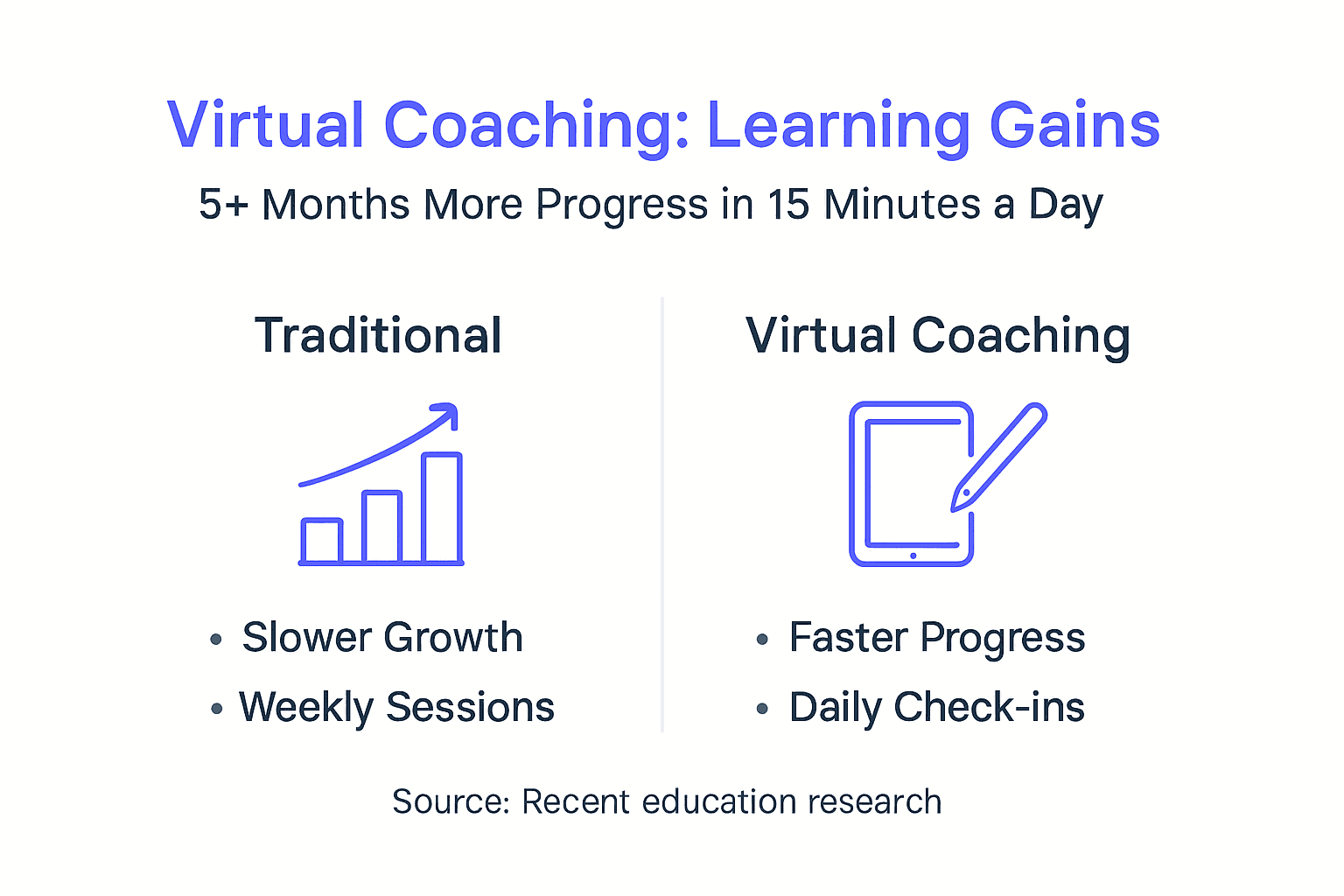
The efficiency stands out. Traditional face-to-face coaching typically requires hour-long sessions that disrupt schedules. Virtual coaching achieves superior results with bite-sized daily interactions that fit seamlessly into existing routines. This efficiency makes sustained engagement realistic for busy individuals.
The data supports virtual coaching as a powerful tool for both educational and personal development contexts. The measurable gains validate the investment of time and resources, building confidence for potential users evaluating whether virtual coaching can truly deliver results.
Common Misconceptions About Virtual Coaching
Several persistent myths prevent people from fully embracing virtual coaching's potential. Addressing these misconceptions directly helps set realistic expectations and builds informed trust.
Misconception: Virtual coaching is just a cheaper, less effective substitute for in-person coaching.
Reality: Blended virtual coaching can match or exceed face-to-face effectiveness by offering superior flexibility, consistency, and accessibility. The modality matters less than the quality of interactions and accountability structure.
Misconception: AI coaching completely replaces human connection and empathy.
Reality: AI supplements rather than replaces the human element. The best virtual coaching platforms use AI to handle scheduling, tracking, and personalization while maintaining opportunities for human interaction when deeper emotional support is needed.
Misconception: Virtual coaching delivers generic motivational content lacking personalization.
Reality: Modern AI-driven coaching analyzes user data, behavior patterns, and preferences to deliver highly tailored messages and interventions. Personalization is a core strength, not a weakness, of well-designed virtual coaching systems.
Misconception: Virtual coaching requires advanced technical skills and constant connectivity.
Reality: Most platforms integrate with familiar tools like WhatsApp and phone calls, requiring minimal technical expertise. Asynchronous features allow flexible engagement even with irregular internet access.
Clearing these myths empowers you to evaluate virtual coaching options accurately. The technology has matured significantly, and evidence-based platforms now deliver results that rival or surpass traditional approaches while offering greater accessibility.
Applying Virtual Coaching for Busy Professionals and Students
Integrating AI-driven virtual coaching into your daily routine maximizes accountability, motivation, and measurable progress. Follow this practical sequence to get started and sustain engagement:
-
Define clear, specific goals: Articulate exactly what you want to achieve, whether fitness milestones, productivity improvements, or skill development. Specificity enables better tracking and more relevant coaching.
-
Schedule consistent check-in times: Block calendar time for coaching interactions just as you would for meetings. Consistency builds habits and prevents coaching from becoming optional.
-
Choose a platform supporting your preferred communication modes: Select a service offering voice calls, messaging, and progress tracking so you can engage in ways that fit different situations and energy levels.
-
Track progress systematically: Use built-in dashboards or journaling features to document wins, challenges, and patterns. Visible progress reinforces motivation.
-
Engage with reflective prompts: Take time to think about coaching questions rather than rushing through check-ins. Reflection deepens learning and reveals insights.
-
Celebrate milestones intentionally: Acknowledge achievements, however small, to maintain positive momentum and build confidence.
Using Coach Call AI exemplifies this approach by automating scheduling, providing WhatsApp-based check-ins, and tracking progress through intuitive visualizations. The platform handles logistics so you can focus on actual growth.
Pro Tip: Treat coaching check-ins as non-negotiable appointments with yourself. Put them on your calendar with reminders, and honor that commitment as seriously as you would a meeting with your boss or a doctor's appointment. This mental framing prevents coaching from slipping when life gets busy.
Integration strategies for maintaining engagement include pairing check-ins with existing routines (morning coffee, commute time), using voice calls for deeper reflection, and switching to quick text responses when time is tight. Flexibility within structure keeps coaching sustainable long-term.
Discover Coach Call AI: Your AI Accountability Partner
Ready to experience consistent, personalized coaching that actually fits your life? Coach Call AI combines phone conversations, WhatsApp integration, and intelligent AI to deliver the accountability and motivation you need without scheduling headaches.
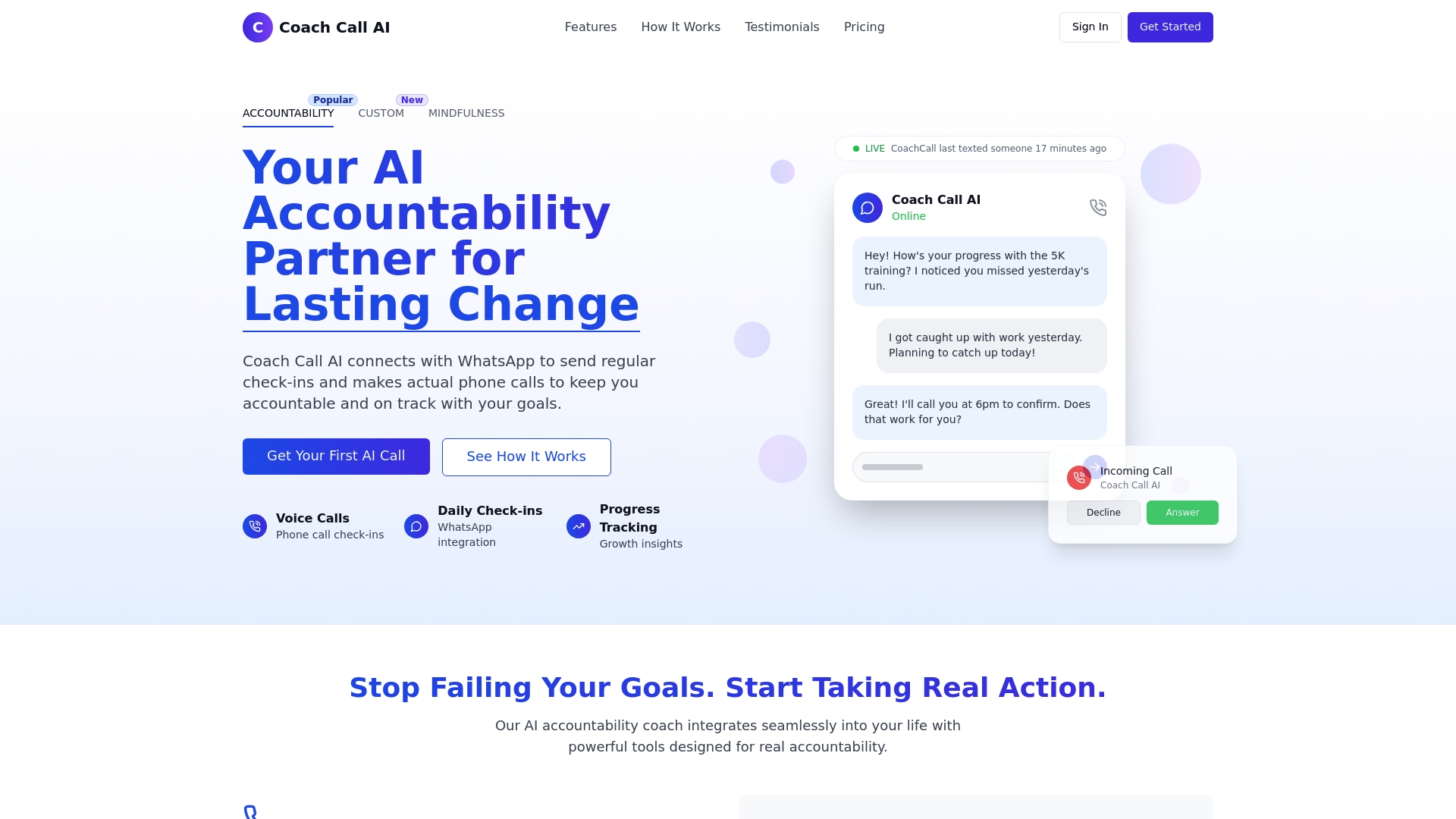
Designed specifically for busy professionals and students, the AI accountability partner provides timely check-ins, celebrates your progress, and adapts to your unique patterns. Whether you're pursuing fitness goals, building better habits, or developing new skills, virtual coaching solutions from Coach Call AI offer the support structure that turns intentions into sustained achievement. Start your journey toward measurable progress today.
FAQ
What Is Virtual Coaching and How Does It Differ from Traditional Coaching?
Virtual coaching uses digital platforms, phone calls, and messaging apps to deliver personalized support and accountability remotely. Unlike traditional face-to-face coaching, it offers greater flexibility in scheduling and location while leveraging AI to provide consistent, data-driven interactions. The core coaching principles remain the same, but delivery methods adapt to modern communication preferences and busy lifestyles.
Can Virtual Coaching Be as Effective as Face-to-Face Coaching?
Blended virtual coaching can equal or surpass face-to-face effectiveness due to superior flexibility, consistency, and accessibility. Research shows virtual modalities deliver measurable learning gains and improved persistence when designed with quality interactions and personalized support. Effectiveness depends more on coaching quality, user engagement, and accountability structures than on whether interactions happen in person or digitally.
How Does AI Enhance the Coaching Experience?
AI schedules sessions automatically, tracks progress in real time, and sends personalized motivational messages based on your behavior patterns and preferences. It supplements human coaching by providing consistent accountability that never forgets check-ins or gets too busy to follow up. AI in coaching platforms analyzes your data to deliver timely interventions and celebrate milestones, creating a tailored experience that adapts as you progress.
What Are Common Mistakes to Avoid with Virtual Coaching?
Skipping scheduled check-ins undermines the accountability structure that drives results, so treat coaching appointments as non-negotiable commitments. Using platforms offering generic motivational content instead of personalized coaching wastes your time and limits effectiveness. Failing to engage with reflective prompts or track progress prevents you from identifying patterns and adjusting strategies, reducing the depth of learning and growth virtual coaching can provide.