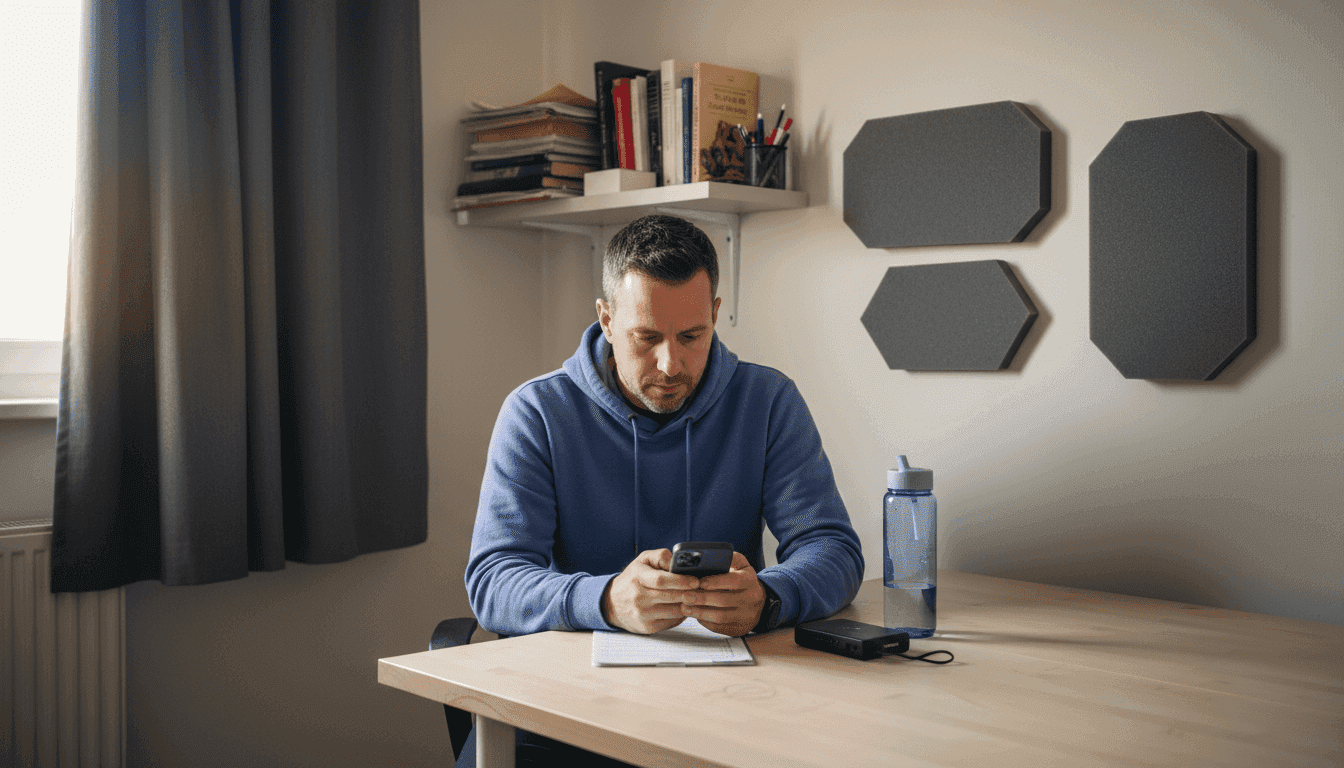
Many busy professionals and students struggle to maintain consistent voice coaching practice while managing public speaking anxiety. Without a structured approach and accountability, even the most motivated individuals often abandon their vocal improvement goals within weeks. This guide provides a practical framework combining tailored exercises, AI-driven accountability, and proven techniques to achieve measurable vocal clarity improvements and reduce speaking anxiety by up to 30% within 8 weeks.
Table of Contents
- Prerequisites And Tools Needed For Effective Voice Coaching
- Stepwise Structured Approach To Voice Coaching
- Using Ai-Powered Accountability For Consistent Progress
- Common Mistakes And Troubleshooting In Voice Coaching
- Expected Results And Outcomes With Voice Coaching
- Enhance Your Voice Coaching With Ai Accountability
- How To Use Voice Coaching: Faqs
Key Takeaways
| Point | Details |
|---|---|
| Essential Setup | Quiet environment and recording tools enable focused, effective practice sessions. |
| Structured Exercises | Breathing and vocal warmups targeting anxiety reduce stress by 30% in 8 weeks. |
| AI Accountability Boost | AI reminders increase practice adherence by 40% and motivation by 35%. |
| Avoid Common Mistakes | Skipping warmups strains muscles in 25% of beginners; proper hydration prevents vocal fatigue. |
| Realistic Timeline | Consistent 4 to 6 week practice delivers noticeable vocal clarity and pitch control improvements. |
Prerequisites and Tools Needed for Effective Voice Coaching
Before starting any voice coaching program, you need the right foundation. Creating an optimal practice environment dramatically increases your chances of success and prevents common setbacks that derail beginners.
Your practice space should be quiet and distraction-free. Background noise interferes with both concentration and accurate recording playback. Choose a room where you can close the door and practice without interruptions for at least 15 to 20 minutes per session.
A smartphone or digital recorder is essential for capturing your practice sessions. Recording allows you to hear your progress objectively and identify specific areas needing improvement. Most smartphones have built-in voice recording apps that work perfectly for this purpose.
Scheduling regular practice times creates consistency despite busy schedules. Block out specific times in your calendar just as you would for important meetings. Early morning or evening slots often work best for professionals and students.
Access to accountability tools significantly impacts your success rate. The Coach Call AI accountability platform provides automated reminders and scheduled practice calls that simulate real speaking situations. These tools keep you on track when motivation naturally fluctuates.
Essential Tools Checklist:
- Quiet, private practice space with good acoustics
- Recording device (smartphone or dedicated recorder)
- Headphones for accurate playback review
- Water bottle for consistent hydration during practice
- Practice journal or digital notes app for tracking progress
| Tool Category | Specific Items | Purpose |
|---|---|---|
| Environment | Quiet room, closed door | Minimize distractions and background noise |
| Technology | Smartphone, recording app | Capture sessions for review and feedback |
| Health Support | Water, throat lozenges | Maintain vocal health and prevent strain |
| Accountability | AI coaching platform, calendar | Ensure consistent practice adherence |
Pro Tip: Set up your practice space the night before scheduled sessions. Having everything ready eliminates excuses and makes it easier to start when your practice time arrives.
Basic vocal health practices prevent injury and accelerate progress. Drink plenty of water throughout the day, not just during practice. Avoid excessive caffeine and alcohol, which dehydrate vocal cords. Get adequate sleep, as tired vocal muscles are prone to strain.
Stepwise Structured Approach to Voice Coaching
Effective voice coaching follows a logical progression that builds skills safely while reducing anxiety. This structured approach prevents overwhelm and creates measurable improvements week by week.
Start every session with breathing and relaxation exercises. Spend three to five minutes doing diaphragmatic breathing to calm your nervous system and prepare your voice. Inhale slowly through your nose for four counts, hold for four, then exhale through your mouth for six counts. This simple technique activates your parasympathetic nervous system and reduces pre-speaking anxiety.

Vocal warmups come next and should never be skipped. Begin with gentle humming at a comfortable pitch, then move to lip trills and tongue trills. These exercises increase blood flow to vocal muscles without straining them. Gradually add scales and pitch variations as your voice warms up over five to ten minutes.
Core Exercise Sequence:
- Diaphragmatic breathing (3 to 5 minutes) to establish calm baseline
- Gentle humming and lip trills (2 to 3 minutes) for muscle warmup
- Pitch scales and resonance exercises (5 to 7 minutes) building vocal control
- Speaking practice with target phrases (5 to 10 minutes) applying techniques
- Recording review and notes (3 to 5 minutes) identifying improvement areas
Incorporate anxiety-specific exercises explicitly designed for public speaking situations. Using tailored breathing and vocal exercises targeting anxiety reduces public speaking related stress by up to 30% within 8 weeks. Practice power poses before speaking to increase confidence hormones. Visualize successful speaking scenarios while doing your warmups.
"The most effective voice coaching programs combine physical vocal technique with psychological anxiety management strategies. When practiced consistently, this integrated approach produces measurable improvements in both vocal quality and speaker confidence within weeks."
Record every practice session without exception. Listening back reveals patterns you cannot hear while speaking. Note specific moments where your voice sounds strained, too quiet, or lacks clarity. These recordings become your personal progress tracker.
Celebrate small milestones to maintain motivation. When you notice your voice sounds clearer on a recording, acknowledge that win. When you complete a full week of consistent practice, reward yourself. These small celebrations reinforce the habit and make the process enjoyable rather than tedious.
Using AI-powered Accountability for Consistent Progress
Consistency determines success in voice coaching more than any other factor. AI powered accountability systems solve the motivation problem that causes most people to quit within the first month.
Automated reminders dramatically improve practice adherence. AI reminders increase adherence by over 40% compared to self-motivated practice alone. These reminders arrive at optimal times based on your schedule, making it harder to skip sessions even during busy weeks.
Scheduled voice calls through platforms like Coach Call AI simulate real speaking situations. These calls create accountability checkpoints where you practice vocal techniques in conversation. The AI asks questions that require thoughtful responses, giving you opportunities to apply breathing and pitch control in realistic scenarios.
Progress visualization keeps motivation high during plateaus. Seeing graphs of your practice frequency, session duration, and improvement metrics provides tangible evidence of your commitment. Progress visualization boosts motivation by 35% by making abstract improvements concrete.
Personalized coaching personas adapt feedback to your individual needs and learning style. Some people respond better to encouraging cheerleader energy, while others prefer direct analytical feedback. AI systems learn your preferences and adjust their communication approach accordingly.
AI Accountability Benefits:
- Scheduled WhatsApp or phone reminders prevent forgotten sessions
- Real-time feedback during practice calls identifies technique issues immediately
- Milestone celebrations recognize achievements automatically
- Data tracking reveals patterns you might miss manually
- Customizable coaching personas match your motivation style
Pro Tip: Schedule voice coaching calls with Coach Call AI during times when you typically feel most anxious about speaking. This exposure therapy approach combined with vocal techniques accelerates anxiety reduction.
The combination of structured exercises and AI accountability creates a powerful system. The exercises provide the method, while the AI provides the consistency. Together, they overcome the two biggest barriers to voice coaching success.
Common Mistakes and Troubleshooting in Voice Coaching
Even with the best intentions, beginners make predictable mistakes that slow progress or cause vocal injury. Recognizing these pitfalls early prevents frustrating setbacks.
Skipping vocal warmups is the most common mistake. Roughly 25% of beginners experience muscle strain because they jump directly into challenging exercises with cold vocal cords. Your voice is a physical instrument requiring gradual preparation just like any athlete warms up before competition.
Inadequate hydration and vocal rest significantly increase injury risk. Your vocal cords need consistent moisture to function properly. Dehydration causes them to work harder, leading to fatigue and potential damage. Similarly, practicing when sick or overtired multiplies strain risk.
Inconsistent practice delays measurable improvement. Voice coaching requires regular repetition to build muscle memory and reduce anxiety responses. Practicing intensively for three days then skipping two weeks produces minimal results compared to shorter daily sessions.
Common Mistakes to Avoid:
- Starting practice without proper breathing and warmup exercises
- Practicing while dehydrated or with insufficient vocal rest
- Pushing through pain or vocal fatigue instead of stopping
- Neglecting to record sessions and review progress
- Practicing irregularly rather than establishing consistent daily habit
- Ignoring feedback from recordings or accountability partners
| Mistake | Consequence | Solution |
|---|---|---|
| Skipping warmups | Muscle strain in 25% of cases | Always begin with 5 minute breathing and humming routine |
| Poor hydration | Increased vocal fatigue and injury risk | Drink water consistently throughout day, not just during practice |
| Inconsistent practice | Delayed progress and lost motivation | Use AI reminders to maintain daily 15 minute minimum sessions |
| No recording review | Inability to identify specific improvement areas | Record every session and review weekly for pattern recognition |
| Practicing while ill | Risk of vocal cord damage | Take complete rest days when experiencing cold or throat irritation |
Vocal strain manifests as hoarseness, throat pain, or difficulty reaching certain pitches. If you experience any of these symptoms, stop practicing immediately. Rest your voice completely for 24 to 48 hours, maintain hydration, and return to gentler exercises when symptoms resolve.
Pro Tip: Set hydration reminders on your phone every 90 minutes throughout the day. Consistent water intake prevents the vocal fatigue that makes evening practice sessions feel harder than morning ones.
If you plateau after initial progress, examine your practice routine honestly. Are you challenging yourself with new exercises, or repeating the same comfortable warmups? Progressive overload applies to voice coaching just as it does to physical fitness. Gradually increase difficulty to continue improving.
Expected Results and Outcomes with Voice Coaching
Understanding realistic timelines and measurable outcomes keeps expectations aligned with reality and maintains motivation during the improvement process.
Consistent practice for four to six weeks produces noticeable changes in vocal clarity and pitch control. Most people hear clearer articulation in recordings and receive positive feedback from colleagues or classmates about improved speaking presence. These early wins validate the effort invested.
Public speaking anxiety decreases measurably with sustained practice. Anxiety levels can reduce by up to 30% after 8 weeks with tailored voice coaching combining vocal technique and exposure practice. This reduction manifests as decreased physical symptoms like rapid heartbeat and shaky voice during presentations.
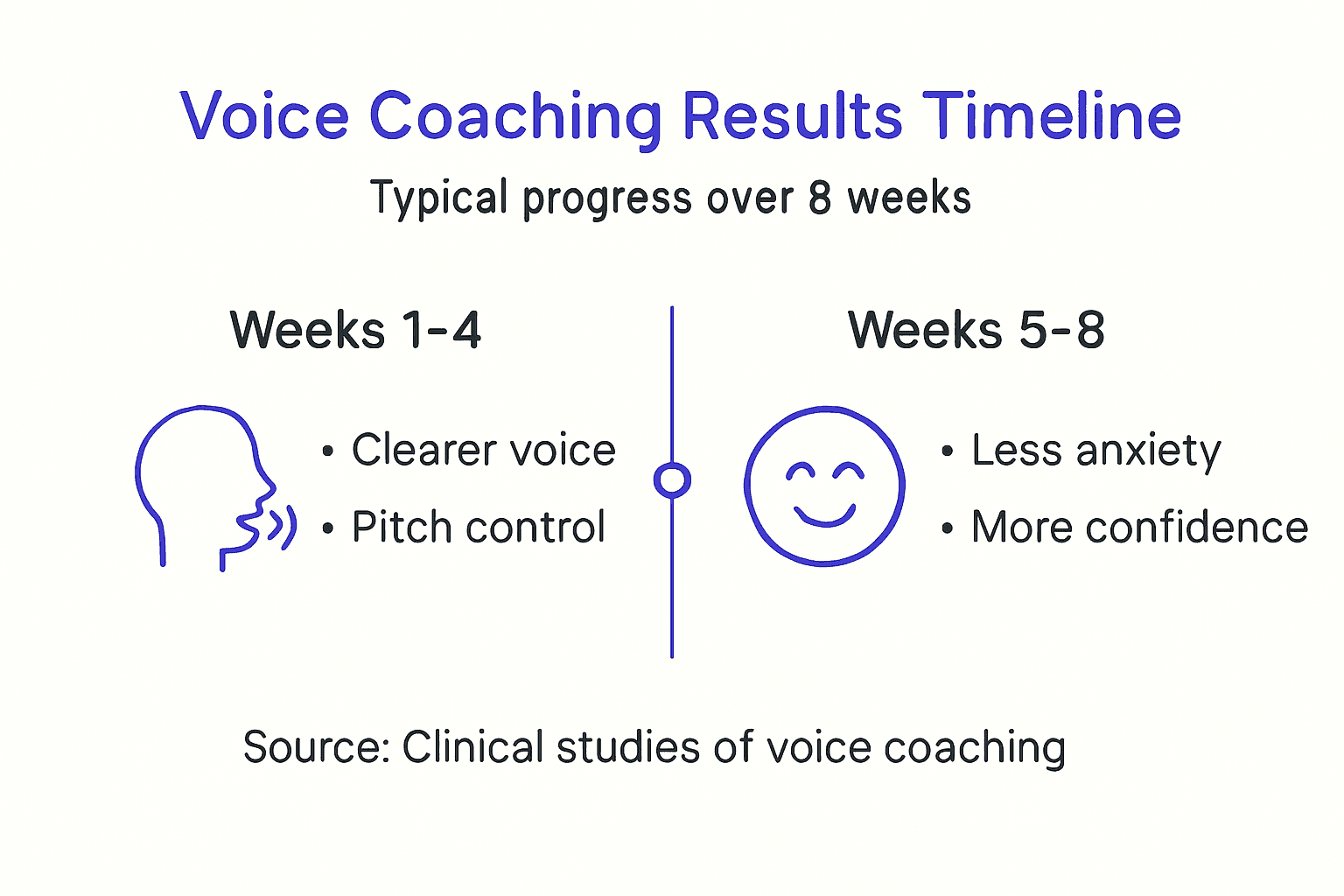
Motivation and adherence improve markedly when you track milestones and progress. Seeing objective metrics like completed practice sessions, recorded improvements, and anxiety reduction scores creates positive momentum. The data proves you are making progress even when subjective feelings fluctuate.
| Timeline | Expected Outcomes | Measurement Methods |
|---|---|---|
| Weeks 1 to 2 | Establishment of practice habit, initial vocal awareness | Practice frequency tracking, basic recording comparisons |
| Weeks 3 to 4 | Improved breathing control, reduced vocal strain | Recording clarity analysis, subjective comfort ratings |
| Weeks 5 to 6 | Noticeable pitch control and articulation gains | Before and after recording comparisons, feedback from others |
| Weeks 7 to 8 | Measurable anxiety reduction of up to 30% | Anxiety self-assessment scales, presentation comfort ratings |
| Weeks 9 to 12 | Solidified skills, increased speaking confidence | Consistent recording quality, willingness to pursue speaking opportunities |
"Voice coaching improvements follow a nonlinear path with initial rapid gains, followed by plateaus, then breakthrough moments. Consistent practice through plateaus separates those who achieve lasting improvement from those who quit prematurely."
Objective recording reviews provide the most reliable progress indicators. Compare recordings from week one to week four and note specific differences in clarity, pitch stability, and vocal confidence. These tangible comparisons overcome the subjective difficulty of hearing your own improvement.
Beyond vocal technique, expect increased willingness to pursue speaking opportunities. As anxiety decreases and vocal control improves, you will naturally seek situations that previously caused avoidance. This behavior change represents the ultimate goal of effective voice coaching.
Enhance Your Voice Coaching with AI Accountability
Implementing the strategies in this guide requires consistency that many busy professionals and students struggle to maintain alone. AI accountability platform Coach Call AI solves this challenge by providing automated reminders, scheduled practice calls, and personalized coaching support tailored to your specific schedule and goals.
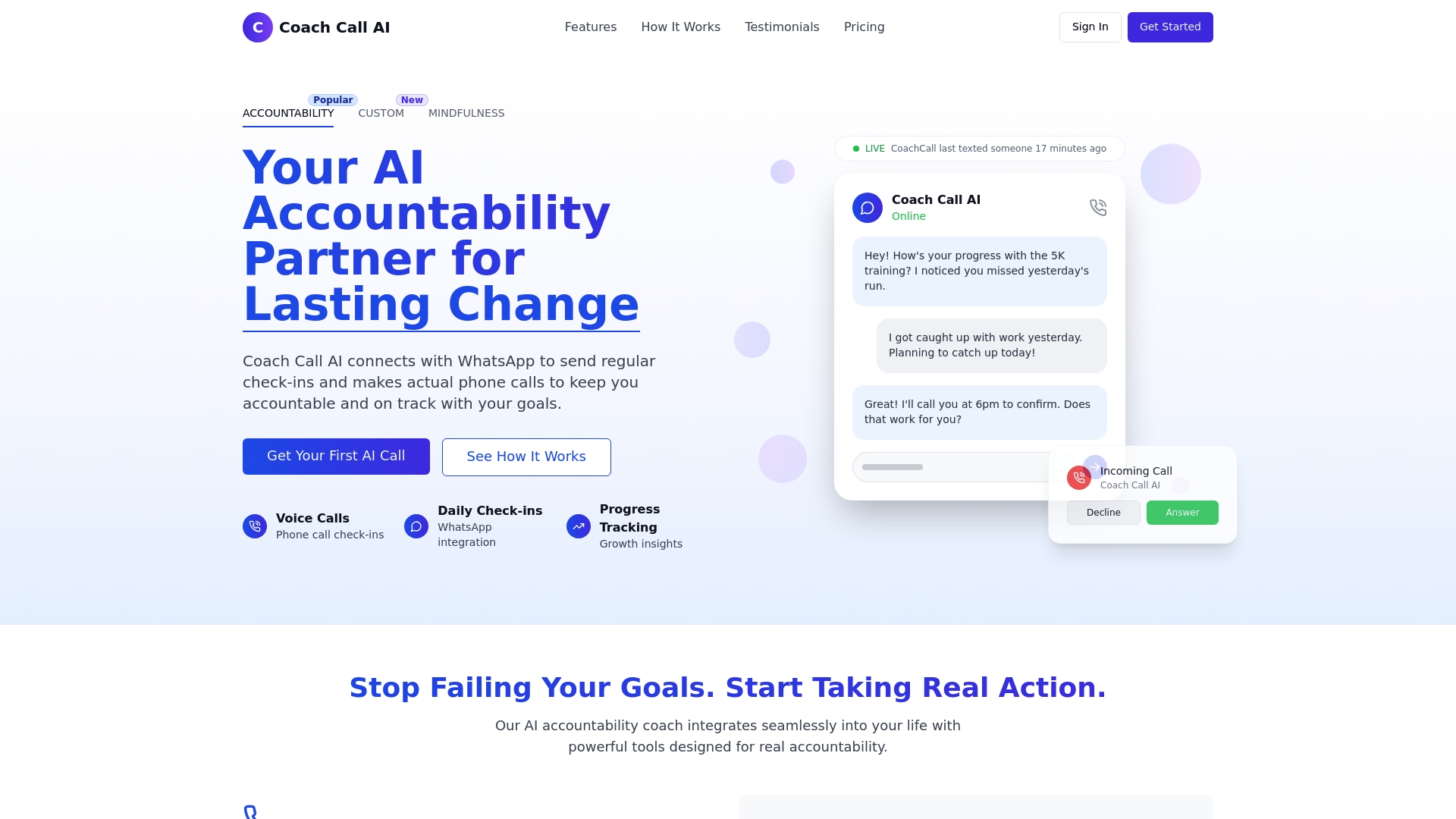
The platform integrates seamlessly with WhatsApp to deliver timely check-ins and motivational messages exactly when you need them. Scheduled voice calls simulate real speaking situations, allowing you to practice vocal techniques in conversational contexts rather than isolated exercises. This practical application accelerates both skill development and anxiety reduction.
Personalized coaching personas adapt to your learning style and motivation needs, providing encouragement or analytical feedback based on what drives you most effectively. Progress visualization features track your practice consistency and celebrate milestones automatically, maintaining momentum through inevitable motivation dips. By combining the structured exercises outlined in this guide with AI-driven accountability, you create a comprehensive system that delivers measurable public speaking improvements within weeks.
How to Use Voice Coaching: FAQs
How much time do I need to set up for voice coaching?
Initial setup takes approximately 30 minutes to identify a quiet practice space, download a recording app, and schedule your first week of practice sessions. Ongoing daily practice requires 15 to 20 minutes minimum for effective results.
What is the best frequency for voice coaching practice?
Daily practice of 15 to 20 minutes produces significantly better results than longer infrequent sessions. Consistency builds muscle memory and reduces anxiety more effectively than sporadic intensive practice.
How do I handle vocal strain safely during practice?
Stop practicing immediately if you experience hoarseness, throat pain, or difficulty reaching pitches. Rest your voice completely for 24 to 48 hours, maintain hydration, and consult a healthcare provider if symptoms persist beyond three days.
Can AI tools really help with voice coaching accountability?
Yes, research shows AI reminders increase practice adherence by over 40% compared to self-motivation alone. Automated scheduling, progress tracking, and milestone celebrations address the consistency challenges that cause most people to quit.
How long before I notice improvement in public speaking anxiety?
Most people experience measurable anxiety reduction within four to six weeks of consistent practice. Clinical studies demonstrate up to 30% anxiety reduction after eight weeks when combining vocal technique with exposure practice.
Do I need expensive equipment to start voice coaching?
No, a smartphone with a voice recording app and a quiet practice space provide everything necessary for effective voice coaching. Additional tools like external microphones or specialized apps offer marginal benefits but are not required for measurable improvement.